
Following the Fricot Nugget
Between Corporate Photography and Specimen Logic
Written by: Alex Chen
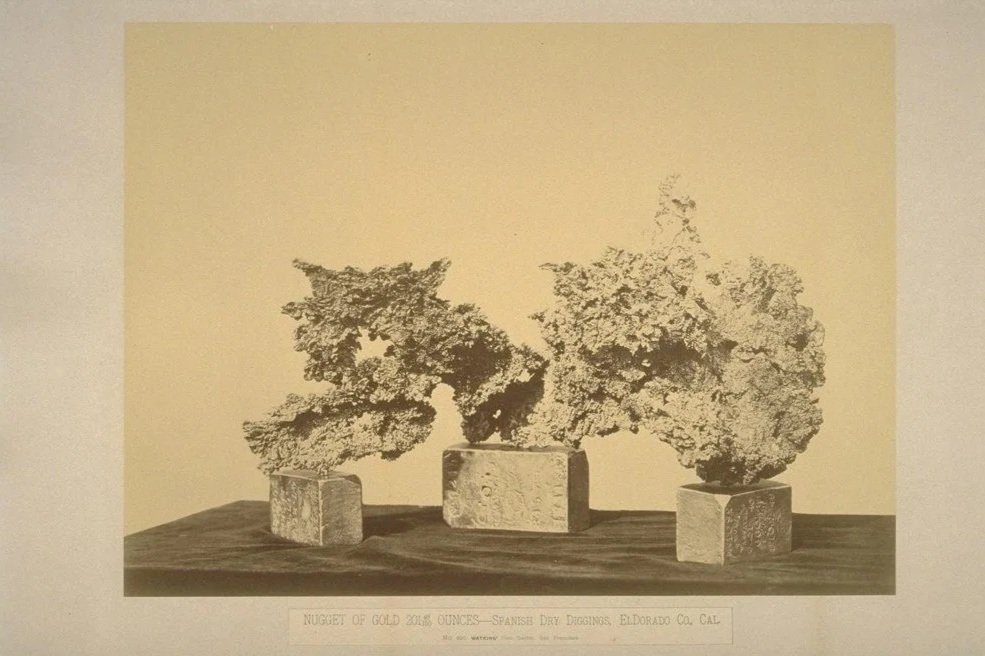
Figure 1.Carleton E. Watkins, “Nugget of Gold” 201 40/100 Ounces—Spanish Dry Diggings, El Dorado Co., Cal., 1866–67. Albumen print, 14¾ × 19¾ in. (37.3 × 50.2 cm). Hearst Mining Collection of Views by C. E. Watkins, 1871–1876, Bancroft Library, University of California, Berkeley
In 1865, at the Spanish Dry Diggings of El Dorado County, miner William Russell Davis unearthed a 201-troy-ounce mass of gold (1). As the largest surviving piece of crystalline gold from the California Gold Rush, this specimen quickly became an object of fascination among collectors and investors alike (2). Within a year, having first been documented by San Franciscan bankers Hickox & Spear, it had passed into the hands of French entrepreneur Jules Fricot, from which it became known as the Fricot Nugget (3). Subsequently, in preparation for the Paris Exposition Universelle of 1867, American photographer Carleton E. Watkins captured the colossal nugget balanced atop three gleaming metal bars, christening the composition Nugget of Gold 201 40/100 Ounces—Spanish Dry Diggings, El Dorado Co., Cal. (fig. 1) (4).
In her article “Mineral Analogs,” Monica Bravo offers the most extensive interpretation of Nugget of Gold, casting it as a photograph that “teaches viewers to make an equivalence between mineral and money.” Watkins, intentionally or unintentionally, visualizes a form of commodity fetishism by directly juxtaposing the raw nugget with its acculturated counterparts. In this reading, the photograph naturalizes the transformation of mineral resources into capital—all while the labor enabling this transformation remains obscured out of frame, even if, as she clarifies, this correspondence is not perfectly one-to-one. Still, regardless of whether Watkins consciously aimed to evoke commodity fetishism, Bravo contends that he knew his photographs could support the mining industry by demonstrating the presence of mineral deposits and encouraging further investment (5).
Other scholars have similarly situated most, if not all, of Watkins’s oeuvre as serving his patrons’ economic and legal needs and advancing the industrial development of unworked land. These goals align with the conventions of corporate photography, defined in this essay as a genre of images commissioned by corporate patrons to advance their promotional interests while still reflecting the photographer’s own aesthetic vision. Watkins’s work imposes a sense of coherence and regularity, under the pretense that the cacophony of nineteenth-century development had always been a natural part of the landscape, or what Christine Hult-Lewis, following Leo Marx, identifies as the “machine in the garden” (6). To accomplish this, he “seems to have deliberated the view and to have chosen angles that exclude distracting details and eliminate ambiguities” (7). If asymmetrical features are present, they are carefully controlled to still showcase the uniform splendor of human infrastructure and the natural settings in which they exist, as Nanette Margaret Sexton observes in Watkins’s views of Mendocino, California (8). Watkins’s later photographs shift away from the “machine in the garden” toward the “technological sublime,” where machinery dominates nature, generating both awe and terror. Nevertheless, mechanical power is reconciled as a shared experience, one that ultimately unites viewers across a multicultural America (9).
Despite these accounts that position Watkins as an agent of corporate photography, Nugget of Gold presents its subject with a clarity and deliberateness that, although Bravo foregrounds the equivalence between mineral and money, embodies “the idea of a sacrosanct nature” (10). Here, the rugged gold formation rises above a multiplicity of neatly arranged bars, its singular, organic surface distinguished from the crisp, illuminated edges of the repeating forms beneath it. Watkins centers the specimen frontally, bathing it in an even, halo-like light that emphasizes its dendritic roughness and protrusions. The improvised pedestal of metal bars lifts the nugget into a field of negative space, further isolating it and reinforcing its status as something rare and almost untouchable, unlike the grounded bars, which remain in contact with the velvet-covered table. The sculpture-like form reads less like a to-be asset and more like a natural marvel set into sharp relief—a mineral whose individuality exceeds, rather than conforms to, its industrial purpose.
Of course, one could argue that the entire aesthetic of a sacrosanct nature is contingent on its appeal to investors and emerges, at least in part, from their visions. As Mary Warner Marien writes, “All of Watkins’ photography, including his spectacular view of nature, was commercial—which is not to sully or diminish it, but to situate his aesthetic codes in economic necessity” (11). This recalls an explanation for the modernist look achieved by his contemporaries, such as those achieved by Timothy H. O’Sullivan in his survey photographs promoting Westward Expansion, which he began producing around the same time Nugget of Gold was created (12).
Watkins’s photograph of the Fricot Nugget utilizes its visual rhetoric for promotional goals. At the same time, its compositional choices—which I discuss in detail in the following section—assert what Janice Neri terms “specimen logic,” in which natural-historical description, scientific attentiveness, and morphological wonder intersect. As such, Nugget of Gold cannot be completely reduced to corporate photography, as some of Watkins’s other photographs might be (13). The ambiguities between singularity and standardization or admiration and utility that this produces are not the “distracting details” Marien suggests Watkins eliminated, but the crux of how photographic meaning is constructed here (14). In this sense, the nugget’s appearance of sacrosanct nature can be understood as a product of both specimen logic and corporate photography. Thus, Nugget of Gold functions as a transitional image that negotiates overlapping corporate and specimen oriented approaches—a negotiation that becomes increasingly apparent in later representations of the Fricot Nugget.
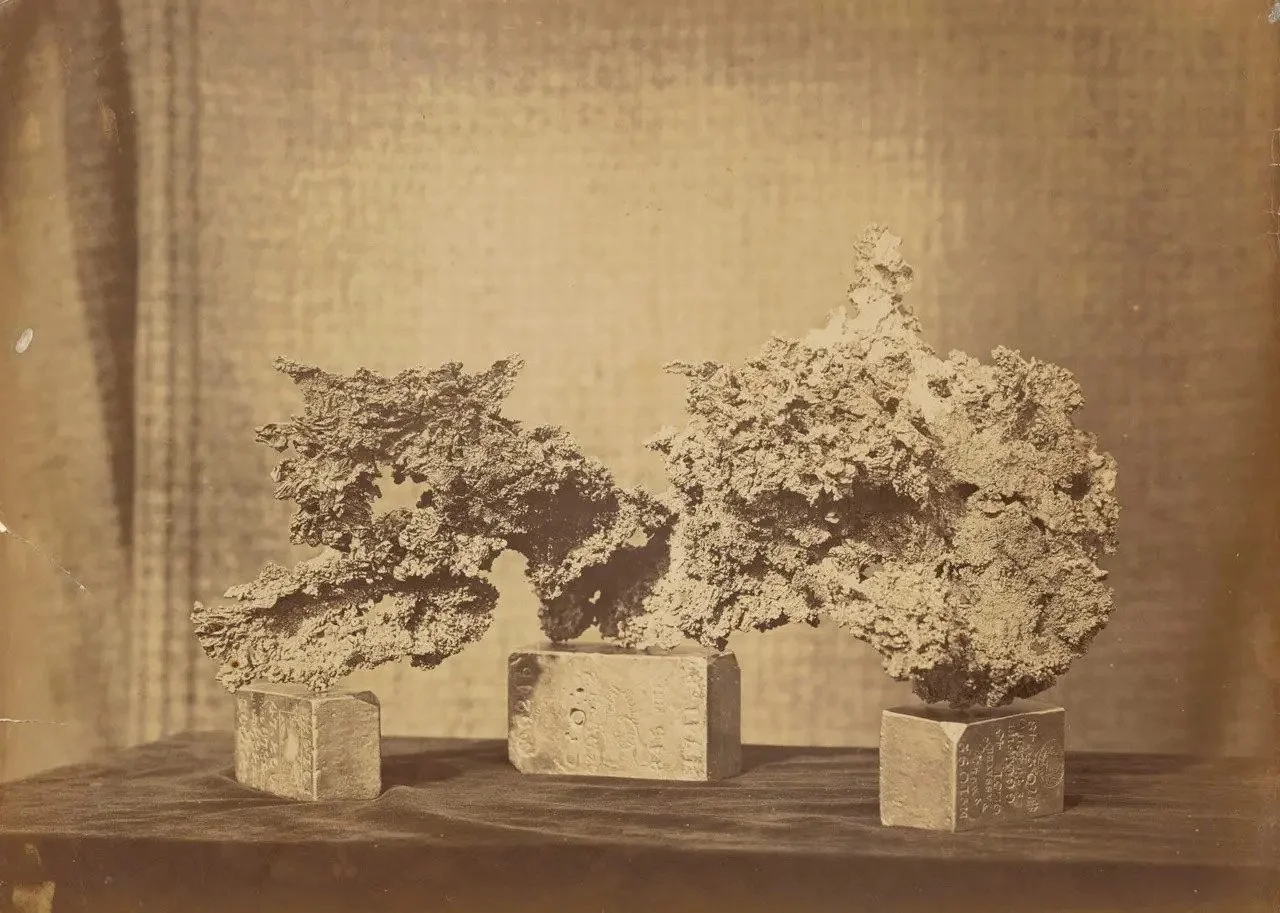
Figure 2: Carleton E. Watkins, Nugget of Gold 201 40/100 Ounces—Spanish Dry Diggings, El Dorado County, California, c. 1865–70. Albumen print, 15¼ × 20¼ in. (38.7 × 51.4 cm). Crocker Art Museum, gift of Barbara Morgans Powers, 1973.37.3.
Nugget of Gold: Three Images
Returning to Nugget of Gold (fig. 1), the composition immediately echoes visual techniques associated with early modern specimen imagery. Most notably, its isolation within an expanse of negative space mirrors the blank backgrounds of scientific illustrations (15). The photograph also accentuates the specimen’s extraordinary scale by presenting it as a clearly differentiated, dominant mass within the frame. While Bravo interprets the nugget’s size as a symbol of California’s mineral abundance, the same visual emphasis can just as well indicate the nugget’s status as a natural wonder (16). This effect is reinforced by Watkins’s preoccupation with measurement—evidenced by his decision to specify the precise weight of 201 troy ounces in the title. His decision was likely motivated by promotional aims, yet it parallels natural-historical conventions where size is documented as an integral characteristic of a specimen’s description (17). Depicted in this manner, and especially in contrast to the refined bars beneath it, the Fricot Nugget conforms to the criteria of an object suited to specimen logic: one that possesses “clearly defined edges or contours and whose surfaces are visually distinct” (18).
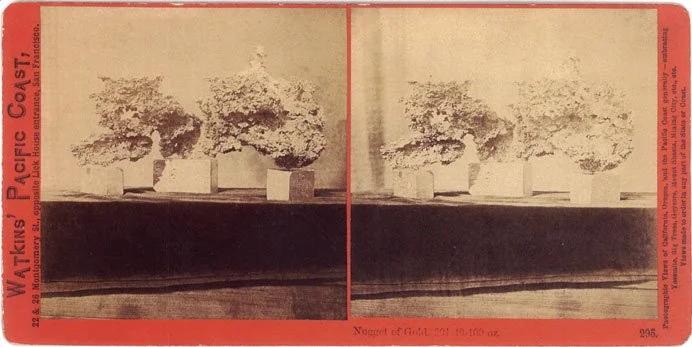
Figure 3: Carleton E. Watkins, Nugget of Gold, 201 40/100 oz. Stereograph. Courtesy of Len Walle, accessed via CarletonWatkins.org.
This is not to suggest that Watkins consciously borrowed from early modern specimen practices or that these approaches continued unchanged into the nineteenth century. Rather, these resonances clarify why the Fricot Nugget appears specimen-like in this image—an effect that is neither inevitable nor consistent across all of Watkins’s representations of the nugget. In Nugget of Gold 201 40/100 Ounces—Spanish Dry Diggings, El Dorado County, California (fig. 2), for instance, Watkins’s original studio background remains intact, as opposed to the blank background produced for the Paris Exposition Universelle through manipulating the negative (19). In the second photograph, the object is enveloped by a haze of visual noise, diminishing its “clearly defined edges and contours” and weakening its presentation as a specimen. The same is true in Nugget of Gold, 201 40/100 oz. (fig. 3); although in this rendition, the camera is even further removed. As a result, the nugget loses its monumentality, becoming an object overtly anchored in a particular setting, signaled by the exposed table edge and the visible stretch of floor. In both variants, the mass of gold is more readily legible as a raw material. This is most evident in Nugget of Gold, 201 40/100 oz., a stereograph presumably marketed as part of the “Watkins’ Pacific Coast” series, as indicated to the left of the photographs. Within this format, the nugget would have become one of many images publicizing the promises of the American West, effectively transformed into an exemplary product yielded by the mining operations and views depicted elsewhere in the series. In this sense, the circulation of this stereograph set participates in a visual economy that is not unlike Watkins’s albumen prints displayed at the Paris Exposition Universelle, in which the nugget served a similar role within the larger collection.
The most consequential element of the framing across all three photographs is the improvised foundation of three metal bars. As assayer’s bars—two of which are “impure” alloys of gold and silver—they introduce a hierarchy of material purity that amplifies the homogenous nugget’s superiority (20). It is established as a specimen whose singularity is made apparent both in the contrast of purity—and the monetary value tied to it—and in its reliance on the supporting bars that elevate it into negative space. Paradoxically, specimen imagery typically includes “no other objects or elements to distract the viewer’s attention from the details of its form” (21). Yet, without the bars, the bottom portion of the nugget would collapse into the table, making its contours invisible. This tension exemplifies an aspect of Nugget of Gold’s corporate photographic register, which partially accommodates but does not completely reconcile with specimen logic.
Although corporate and natural-historical motivations diverge in their purposes, they may still produce visually comparable outcomes. This convergence becomes clearer when considering that specimen logic, like corporate photography, “was also part of [the] commodification of nature that was central to global trade and commerce” (22). While Neri’s analysis focuses on the early modern period, the same logic persisted into the Gilded Age—coinciding with the production of much of Watkins’s oeuvre—when popular interest in natural objects gave rise to a new enterprise, namely the natural history dealership (23). At a time when “the boundaries between commercial and scientific naturalists were quite fluid,” the Fricot Nugget could be appreciated for its size and crystalline form, while these same qualities were simultaneously used to market it as a valuable commodity (24). Taken together, a single image could imbue a natural resource with the status of a commodity through two parallel visual modes: corporate photography, which emphasized economic potential and the promise of reproducible finds, and specimen logic, which accentuated aesthetic singularity and morphology. These modes often appealed to overlapping audiences, including figures such as Jules Fricot, who occupied spaces between market-minded entrepreneur and scientific collector.
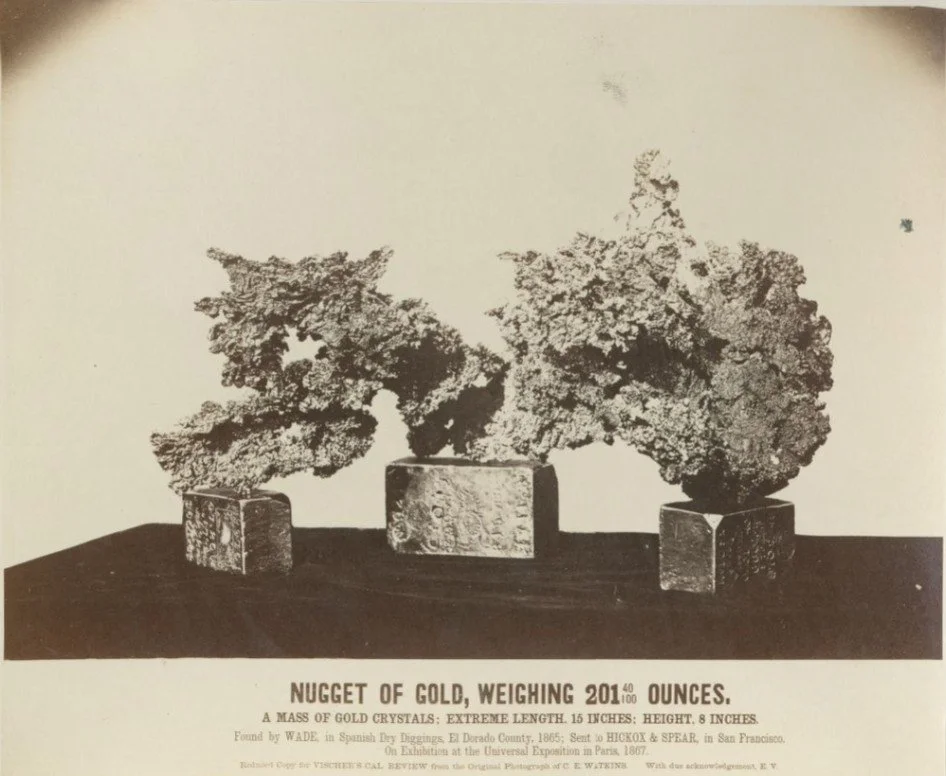
Figure 4: Nugget of Gold, Weighing 201 40/100 Ounces. A Mass of Gold Crystals: Extreme Length, 15 Inches; Height 8 Inches. Photograph by Carleton E. Watkins. Published in Edward Vischer, Vischer’s Pictorial of California (San Francisco: J. Winterburn, 1870). Special Collections, Honnold Mudd Library, The Claremont Colleges.
The Fricot Nugget, After Watkins
The first known reproduction of Watkins’s Nugget of Gold appears in Vischer’s Pictorial of California, published in 1870. There, the nugget is titled Nugget of Gold, Weighing 201 40/100 Ounces, A Mass of Gold Crystals: Extreme Length, 15 Inches; Height, 8 Inches (fig. 4), in the section “Review of California’s Progress. Compilation of Technical Topographic and Pictorial Subjects, Mining, Agriculture and Industry, Traffic, Commerce and Shipping” (25). The section title frames the nugget as part of a narrative of California’s progress, reinforced by its inclusion in a compilation alongside other subjects. This photobook arrangement mirrors the effect produced by the nugget being part of a set, comparable to that generated by Watkins’s stereograph series and Paris Exposition Universelle collection.
Although the addition of specific, remarkable measurements—“Extreme Length, 15 Inches; Height, 8 Inches”—may echo specimen sensibilities, Bravo’s interpretation of the nugget’s size as symbolic of California’s mineral abundance is arguably more relevant in this context because of how the photograph is printed (26). The darkened photograph gives the once smooth assayer’s bars a roughness similar to the nugget itself, thereby obscuring their singularity and making the two elements appear connected, especially where they make contact. As a result, the specimen seems convertible into assayer’s bars, with its size, in this context, suggesting the sheer amount of wealth this raw material could generate.
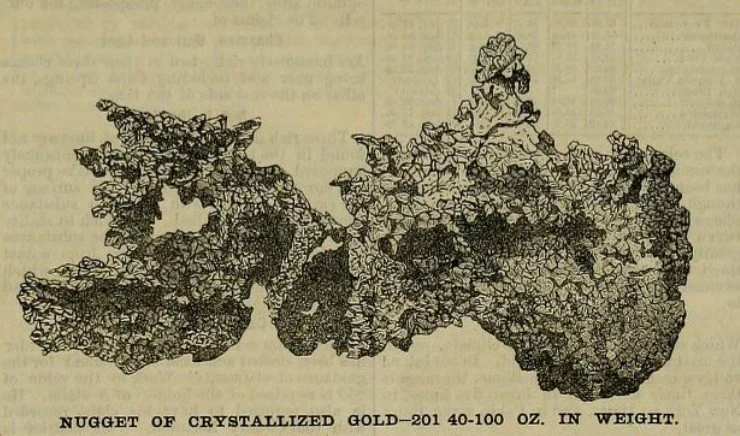
Figure 5: Nugget of Crystallized Gold—201 40-100 Oz. in Weight, 1873. Woodcut. Published in “Nugget of Crystallized Gold,” Mining and Scientific Press (San Francisco), May 3, 1873. Dewey & Co., Patent Solicitors.
Whereas Vischer’s reproduction positions the Fricot Nugget primarily through a corporate photographic lens, its reproductions in the Mining and Scientific Press and Pacific Rural Press adopt more of a specimen logic perspective. In each case, one interpretive mode is more pronounced, but both formats continue to operate at the intersection of the two. In these newspapers, Watkins’s photograph was reproduced through woodcut—first in the Mining and Scientific Press in May of 1873, and later in the Pacific Rural Press that August—under the title Nugget of Crystallized Gold—201 40-100 Oz. in Weight (fig. 5) (27). The insertion of the adjective “crystallized” into the title gestures toward the importance of morphology in this rendition.
Visually, this emphasis materializes in the extensive linework afforded by woodcuts, translating each minute crevasse of the specimen into lined facets. The most significant departure from Watkins’s original photographs (figs. 1–3) is the nugget’s complete isolation: the assayer’s bars and velvet-covered table are removed altogether, producing greater conformity to the conventions of specimen logic (28). Additionally, the use of woodcut instead of photographic print—necessitated by the newspaper format—aligns these representations with early modern scientific illustrations, which likewise were frequently executed and printed as woodcuts or engravings. This isolation no longer reaffirms the identity of the nugget as gold—or any metal, for that matter. However, through the resonance between it and the assayer’s bars in the original photographs, Nugget of Crystalized Gold leads the audience to regard it as an object that is visually interesting to look at with its richly textured surface.
The description accompanying the woodcut, identical in both newspapers, offers a firsthand account of how the nugget was framed for readers and is reproduced here in full:
Pieces of crystallized gold are so seldom found that they are highly prized, aside from their mere intrinsic value and great beauty. When they occur in large pieces, they are still more scarce and proportionately valuable. The accompanying cut shows one of the most beautiful specimens of dendritic crystallized gold, which has, perhaps, ever been found in the world, of its size. It was found in a seam of decomposed quartz, between the slate, at a depth of about 60 feet from the surface, in August 1865, at what is known as the “Grit” Mining Claims, in Spanish Dry Diggings, El Dorado [C]ounty, California. It weighs about 16 pounds and is valued at $3,500. Although much larger nuggets than the one described have been found in this State and in Australia, so far as ascertained, none has been found presenting such a remarkably beautiful appearance. As will be seen from the cut, the gold branches out in the form of offshoots like the branches of trees. Strange to say, this beautiful specimen was not retained in California, but was taken to Paris, where it is now in the possession of Mr. J. Fricot. It was exhibited at the Paris International Exposition in 1868 [sic] and was much admired and appreciated by those who had the pleasure of seeing it. The cut shown was made from a large sized photograph by Watkins, of the Yosemite Art Gallery. The specimen is held far above its intrinsic value by its owner, and it is worthy of mention that few people would keep a piece of gold of this size as a mere curiosity when it could be utilized in the usual manner. The owner of the nugget is now in this city on a visit. (29)
What stands out in this account is the extent to which the nugget’s aesthetic appeal is foregrounded. The description dwells on the specimen’s “remarkably beautiful appearance.” It compares it to “the form of offshoots like the branches of trees,” using terms more akin to natural history than to industrial extraction, and attributing a subjective—not pecuniary—value to its sculptural, organic form. The sensibility of this description is not entirely dissimilar from that of early modern naturalists on figured stones, like Robert Plot’s remark that they “seem to be rather made for his [man’s] admiration than use” and Anselmus Boetius de Boodt’s conclusion that “nature wishes us to admire these things, not comprehend them” (30). Still, unlike in these comments, the newspaper’s author observes that it’s surprising the nugget was never “utilized in the usual manner”—as in converted into gold bars or specie—revealing an underlying expectation in the late nineteenth century that even natural-historical specimens ultimately served corporate ends.
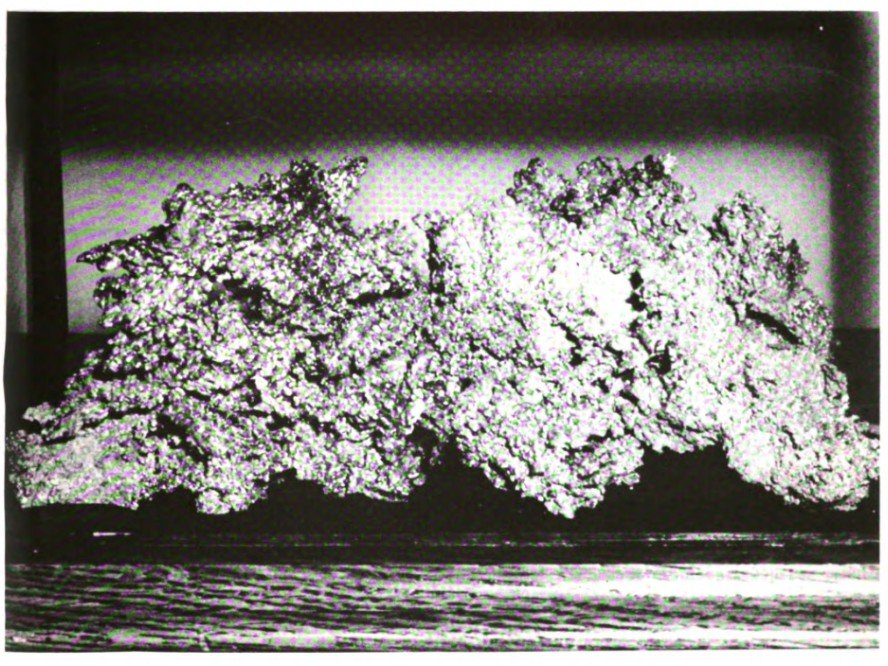
Figure 6: Mary R. Hill, The Fricot Nugget. Published in California Geology 27, no. 6 (June 1974), California Division of Mines and Geology.
The Fricot Nugget, 20th and 21st Centuries
Following its disappearance after the Paris Exposition Universelle of 1867, the Fricot Nugget was rediscovered in a safe in Calaveras County, California, by Marie Fricot Benton, Jules Fricot’s daughter. Sometime before 1930, she donated it to the California Division of Mines and Geology (31). By the 1970s, it had returned to display at the California Division of Mines and Geology’s mineral exhibit in San Francisco’s Ferry Building. Here, two photographs of the nugget were made by Mary R. Hill, editor-in-chief of California Geology—one was published in the magazine’s June 1974 issue (fig. 6), and the other appeared in Gold Districts of California (fig. 7) by William B. Clark, a geologist for the California Division of Mines and Geology. Even in these later photographs, traces of both corporate photography and specimen logic exist, though these modes of representation are expressed differently than in the nineteenth-century renditions of the Fricot Nugget.
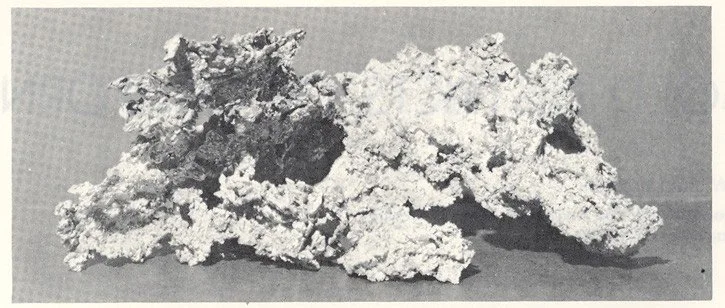
Figure 7: Mary R. Hill, The Fricot Nugget. Published in William B. Clark, Gold Districts of California (Sacramento: California Division of Mines and Geology, 1970).
These photographs feature the nugget by itself, but unlike its appearance in Mining and Scientific Press and Pacific Rural Press, the nugget has been rotated to a different orientation. It is important to clarify that being by itself does not mean the nugget is in isolation. The table on which it is displayed is still visible in both photographs, either overtly (fig. 6) or as suggested by the shadows cast by the nugget (fig. 7). The table’s presence anchors them in a setting like Watkins’s photographs as opposed to the 1873 newspapers, thus not fully conforming to specimen logic. Their orientation, too, diminishes the aesthetic appeal associated with this logic, lacking the strong, flowing, rhythmic contours of their predecessors’ depictions, which have largely been flattened out and rendered less exaggerated.
The strongest departure from previous renditions may be the use of strong lighting, which can still create the perception of depth akin to Watkins’s photographs (fig. 7), but can also eliminate it completely if flash is used (fig. 6). In terms of texture, the smothering of light almost flattens highlighted areas completely while overemphasizing others with accentuated shadows; this is most apparent in fig. 6, but traces are still present in fig. 7. In this way, Hill’s photographs are reminiscent of a nugget undergoing smelting, with some parts darkening as if charred and others gleaming like molten metal. Here, it does not matter that there are no assayer’s bars to reaffirm the gold nugget’s identity as metal; the separation of the two no longer matters at all, as the nugget itself, with its dramatic lighting, now embodies a raw form in the process of refinement.
These observations become more significant when considering the photographs in the context of their appearances in geological publications that also featured mining schematics, gold price graphs, and maps of gold occurrences. For instance, a description associated with one of the photographs (fig. 7) estimates that “melted down as gold, [the nugget] would be worth some seven or eight thousand dollars,” though, of course, the description also acknowledges that “its value as a historical object and museum piece is much more” (32). As such, the Fricot Nugget, in these photographs and publications, actively negotiates between corporate photography and specimen logic, though perhaps it is portrayed as closer to raw material for refinement than a singular specimen of beauty.
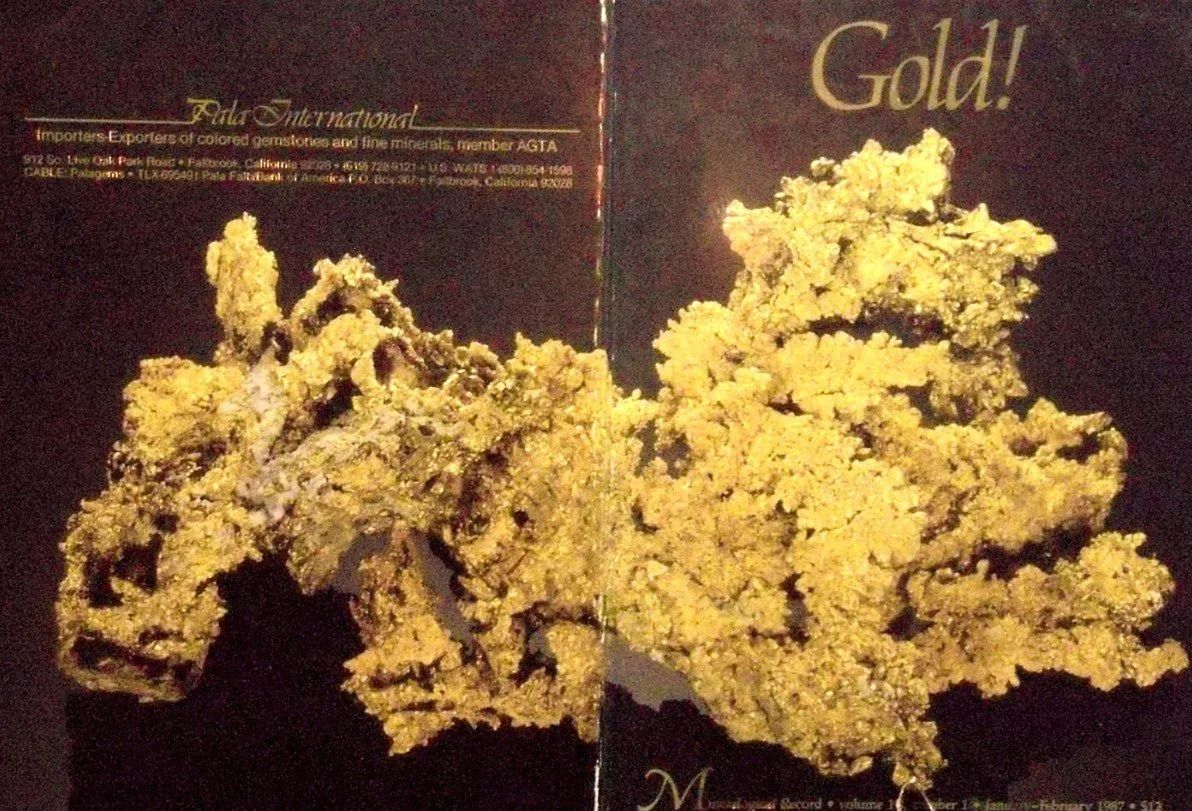
Figure 8: The Fricot Nugget. Cover of The Mineralogical Record, January–February 1987, vol. 18, no. 1. Courtesy of E. L. Clopton, accessed via Mindat.org.
In 1983, the nugget was featured on the cover of the January–February issue of The Mineralogical Record, titled “Gold!” (fig. 8). Unlike the previous publications, this magazine was also catered toward mineral-collecting hobbyists rather than solely amateur (or professional) geologists, appealing to readers who value a specimen’s beauty, rarity, and collectible qualities as much as—or more than—its industrial significance. This becomes apparent in the specimen’s presentation, where it is again rotated—this time into an orientation that accentuates its contours, likened to the cascading branches of trees. The use of color printing, instead of black-and-white, allows readers to fully appreciate the nugget’s lustrous surfaces and intricate textures against the empty black background, while still preserving its sense of depth.
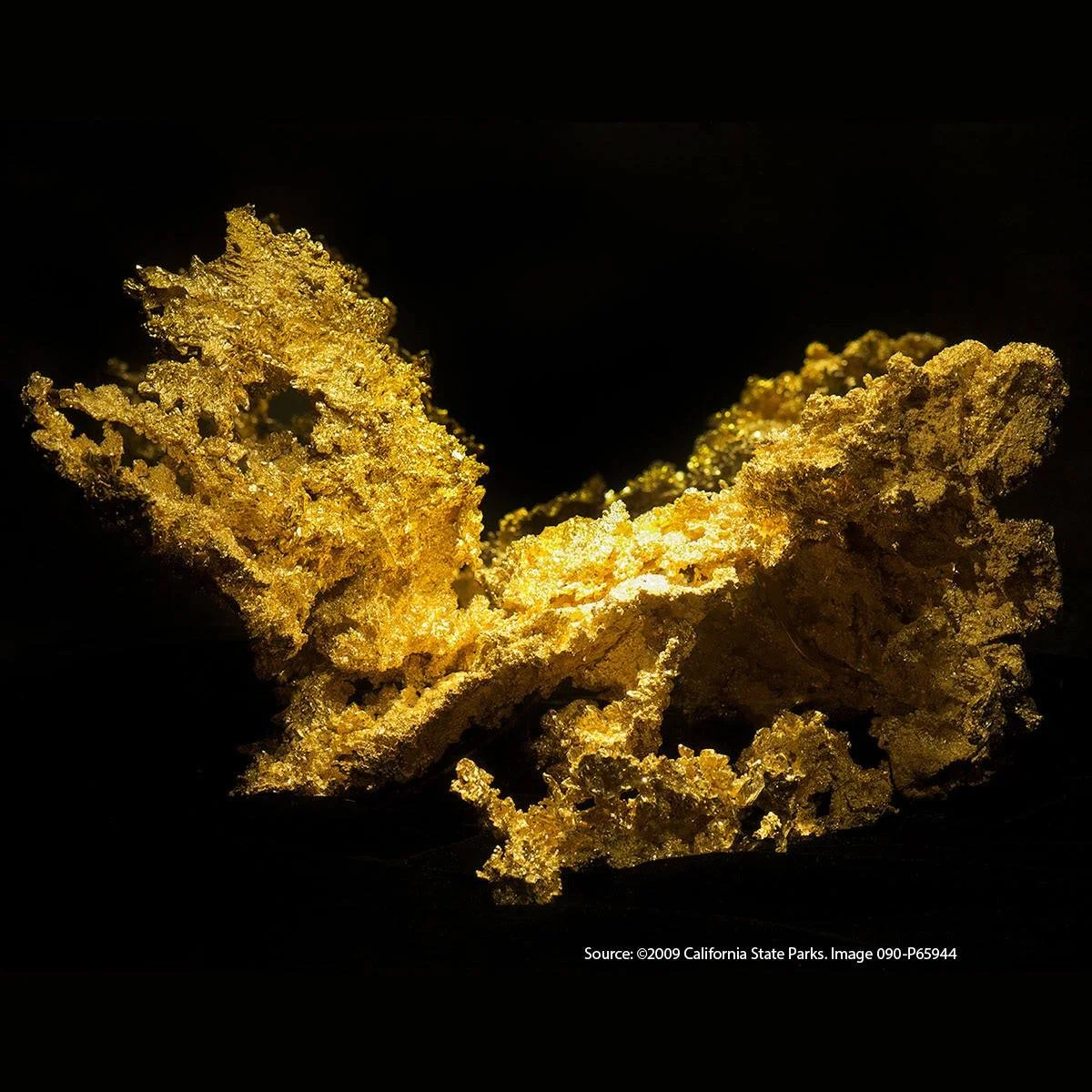
Figure 9: The Fricot Nugget. In the California Mining and Mineral Museum, Mariposa County, California. Photograph by California State Parks, 2009, 090-P65944.
Much the same could be said about a 2009 photograph of the Fricot Nugget at the California State Mining and Mineral Museum in Mariposa County (fig. 9), where it had been transferred by the California Geological Survey (formerly the California Division of Mines and Geology). It is presented as part of a collection that includes materially low-value but aesthetically prized minerals like benitoite, likewise encouraging an interpretation of the nugget based on specimen logic. Once again, it has been rotated, now creating a prominent “V” in its contours, which resembles a pair of wings. What is different, however, is the use of softer lighting, which not only enhances the specimen’s texture but also casts a halo that seems to emanate from it. In this way, the nugget appears almost otherworldly, a quality echoed by its ghostly double reflected in the suspended black background. Although this may challenge the absolute isolation of early modern specimen logic, perhaps it could be interpreted as an innovation that reinforces the singularity of its subject. This motif recurs in contemporary mineral-collecting photography, such as László Kupi’s Gold on Quartz from Eagle’s Nest Mine, Placer Co., California, USA. 100 × 61 × 18 mm (fig. 10). In this image, the “halo” becomes more evident, as a gradient of light rises through what would otherwise be a solid black background. The “double” also remains as a reflection below the specimen, possibly recalling the appearance of an object displayed behind museum glass (33).
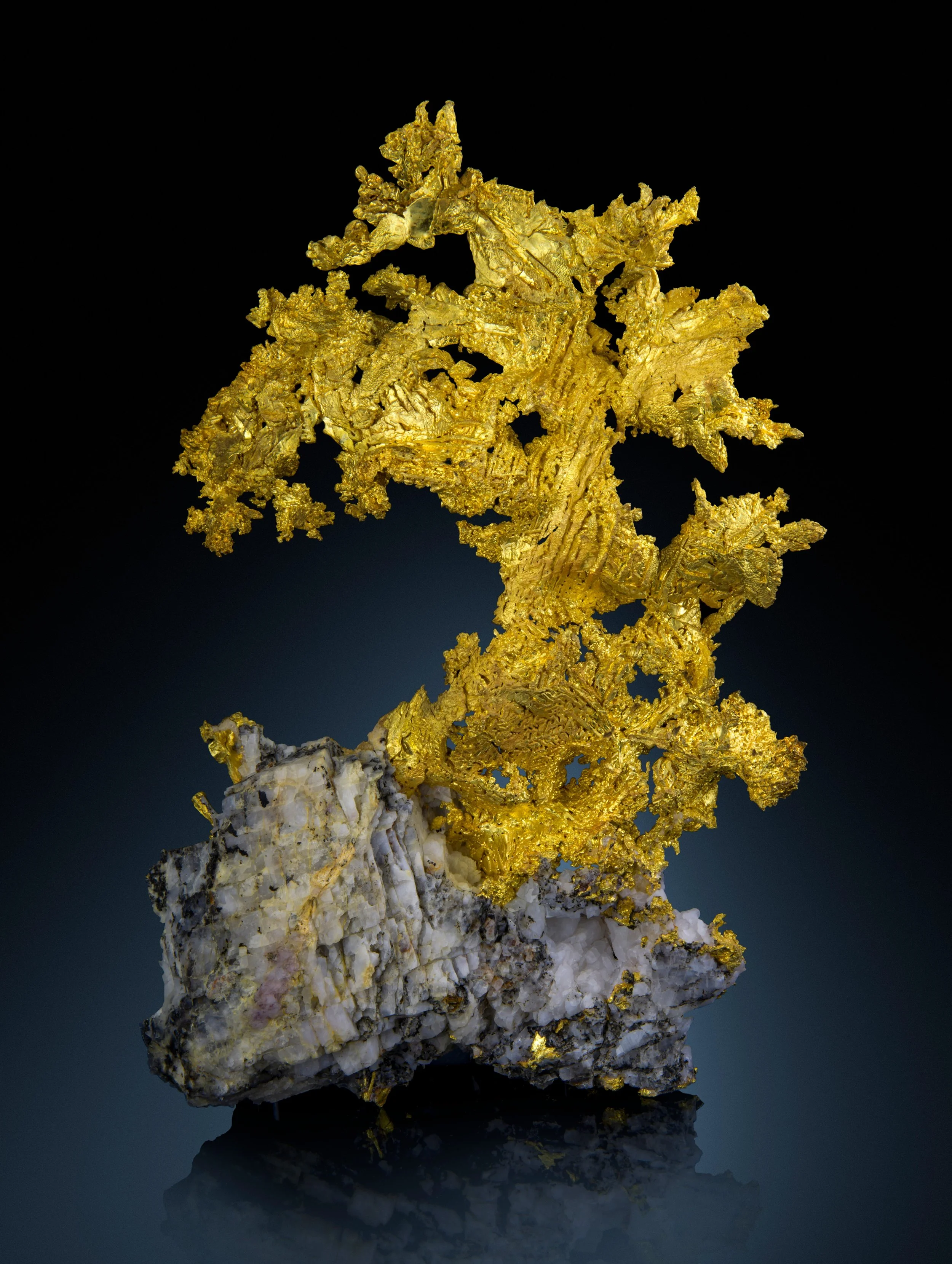
Figure 10: László Kupi. Gold on Quartz from Eagle’s Nest Mine, Placer Co., California, USA. 100 × 61 × 18 mm. © László Kupi, Fine Mineral Photography.
The Future of Carleton E. Watkins and Specimen Logic
The Fricot Nugget was undoubtedly, for most of its life, partially or entirely an object of corporate photography. Yet other visual modes—in this case, specimen logic—can also be applied to its depictions. Of course, specimen logic is inseparable from commodification, but it encourages considerations of how objects are imbued with the status of commodity—not only through the promises of economic potential in corporate photography, but also through the appearance of aesthetic singularity in specimen logic, or both. Attention should also be paid to how these effects are achieved visually, including through lighting, rotation, and isolation (or the lack thereof).
As such, although much of Watkins’s oeuvre is rightly categorized as corporate photography, this label should not totalize all his photographs. Perhaps his non-specimen images might, too, be interpreted through different modes. More broadly, the other subjects that circulated alongside the Fricot Nugget—like the mining schematics in California Geology— should duly be recognized for their own, distinct visual logics as well. In light of these recontextualizations, it is important to remember that visual logics are not fixed or mutually exclusive, but remain fluid across contexts and time.
-
1 Equivalent to approximately 6.26 kilograms, or 13.8 pounds. Some publications identify the miner who unearthed the nugget as “Wade.” See Monica Bravo, “Mineral Analogs: Carleton Watkins’s Photographs and the Gold Standard,” The Art Bulletin 106, no. 3 (2024): 21, https://doi.org/10.1080/00043079.2024.2357426; and Edward Vischer, Vischer’s Pictorial of California (San Francisco: J. Winterburn, 1870). Other accounts specifically attribute the discovery to William Russell Davis, including California State Parks, “California State Mining and Mineral Museum,” 2010, 3, https://www.parks.ca.gov/pages/588/files/MiningMineralMuseumWeb030810.pdf.
2 California State Parks, “California State Mining and Mineral Museum,” 3.
3 Given as “Hickox & Spear” in Bravo, “Mineral Analogs,” 21; and Henry G. Langley, San Francisco Directory (San Francisco: Henry G. Langley, 1873), 303. The Crocker Art Museum’s curatorial worksheet, obtained via email correspondence, identifies the company as “Hicox & Spear.”
4 Bravo, “Mineral Analogs,” 9.
5 Bravo, “Mineral Analogs,” 9, 29, 32.
6 Mary Warner Marien, “Imaging the Corporate Sublime,” in Carleton Watkins: Selected Texts and Bibliography, ed. Amy Rule (Boston: G.K. Hall & Co., 1993), 9; and Christine A. Hult-Lewis, “The Mining Photographs of Carleton Watkins, 1858–1891, and the Origins of Corporate Photography” (PhD diss., Boston University, 2011), 109–110, https://www.proquest.com/dissertations-theses/mining-photographs-carleton-watkins-1858- 1891/docview/880288205/se-2. See also Leo Marx, The Machine in the Garden: Technology and the Pastoral Ideal in America (New York: Oxford University Press, 1964).
7 Marien, “Corporate Sublime,” 5.
8 Nanette Margaret Sexton, “Carleton E. Watkins: Pioneer California Photographer (1829-1916): A Study in the Evolution of Photographic Style During the First Decade of Wet Plate Photography” (PhD diss., Harvard University, 1982), 209–210, https://www.proquest.com/dissertations-theses/carleton-e-watkins-pioneer california/docview/303215549/se-2.
9 Hult-Lewis, “Mining Photographs,” 218. See also David Nye, The American Technological Sublime (Cambridge: MIT Press, 1994).
10 Marien, “Corporate Sublime,” 3.
11 Marien, “Corporate Sublime,” 26 (emphasis added).
12 Robin Kelsey, “Timothy H. O’ Sullivan: Surveys of the American West,” in Archive Style: Photographs and Illustrations for U.S. Surveys, 1850-1890 (Berkeley: University of California Press, 2007).
13 Janice Neri, “Introduction: Specimen Logic,” in The Insect and the Image: Visualizing Nature in Early Modern Europe, 1500-1700 (Minneapolis: University of Minnesota Press, 2011).
14 See n. 7. Although Marien refers specifically to the view and angles of Watkins’s mining photographs, Nugget of Gold still generates ambiguity through its hybridity and emerges in the context of the same enterprise.
15 Neri, Insect and Image, xii.
16 Bravo, “Mineral Analogs,” 30.
17 Douglas Nickel, Carleton Watkins: The Art of Perception (New York: Harry N. Abrams, 1999), 25; For an early modern precedent on the importance of documenting scale in natural-historical representation, see Robert Hooke’s inclusion of “a small drawing or mark to indicate [an] insect’s actual size” in his Micrographia, discussed in Neri, Insect and Image, 127. While Hooke used notations to define the minuteness of his specimens, Watkins includes a precise measurement to convey the opposite extreme—the nugget’s exceptional magnitude.
18 Neri, Insect and Image, xiii.
19 The photograph was originally titled Three Large Gold Nuggets in the collections of Barbara Morgan Powers and Louis L. Stein, according to email correspondence with the Crocker Art Museum. The title was later corrected after curators were informed—based on the titles of Nugget of Gold 201 40/100 Ounces—Spanish Dry Diggings, El Dorado Co., Cal. (Fig. 1) and Nugget of Gold, 201 40/100 oz. (Fig. 3)—that the original label was inaccurate.
20 An assayer analyzes ores and alloys to determine their purity and metal content. For further discussion of the assayer’s bars, see Bravo, “Mineral Analogs,” 29–30.
21 Neri, Insect and Image, xii.
22 Neri, Insect and Image, xiii.
23 Mark V. Barrow Jr., “The Specimen Dealer: Entrepreneurial Natural History in America’s Gilded Age,” Journal of the History of Biology 33, no. 3 (2000): 497, http://www.jstor.org/stable/4331612.
24 Barrow Jr., “Specimen Dealer,” 497.
25 Vischer, Pictorial of California.
26 See n. 16.
27 For further discussion of this woodcut, see Bravo, “Mineral Analogs,” 25–26
28 See n. 21.
29 “Nugget of Crystallized Gold,” Mining and Scientific Press (San Francisco), May 3, 1873, 1; and “Nugget of Crystallized Gold,” Pacific Rural Press (San Francisco), August 2, 1873, 70.
30 Lorraine Daston, “Nature by Design,” in Picturing Art, Producing Science, eds. Peter Galison and Caroline A. Jones (New York: Routledge, 1998), 242. Figured stones were those that appeared to resemble figures, landscapes, or objects.
31 California State Parks, “California State Mining and Mineral Museum,” 3.
32 William B. Clark, Gold Districts of California (Sacramento: California Division of Mines and Geology, 1970), ii.
33 While this creates the appearance of an object displayed behind museum glass, the specimen is actually photographed on glass. As László Kupi explains in email correspondence regarding the “double” reflection: “It is a result of the non-glare glass I’m photographing the specimens [on]. As it is usually a thin (2–3 mm) sheet of special glass, it causes [a] ‘double’ reflection. So [the photograph is taken] not through the glass but on the glass” (emphasis added). László Kupi, email to author, March 16, 2026.
-
Barrow, Mark V., Jr. “The Specimen Dealer: Entrepreneurial Natural History in America’s Gilded Age.” Journal of the History of Biology 33, no. 3 (2000): 493–534. http://www.jstor.org/stable/4331612.
Bravo, Monica. “Mineral Analogs: Carleton Watkins’s Photographs and the Gold Standard.” The Art Bulletin 106, no. 3 (2024): 8–35. https://doi.org/10.1080/00043079.2024.2357426.
California State Parks. “California State Mineral and Mining Museum.” 2010. https://www.parks.ca.gov/pages/588/files/MiningMineralMuseumWeb030810.pdf.
Clark, William B. Gold Districts of California. Sacramento: California Division of Mines and Geology, 1970.
Daston, Lorraine. “Nature by Design.” In Picturing Art, Producing Science, edited by Peter Galison and Caroline A. Jones. New York: Routledge, 1998.
Hult-Lewis, Christine A. “The Mining Photographs of Carleton Watkins, 1858–1891, and the Origins of Corporate Photography.” PhD diss., Boston University, 2011. https://www.proquest.com/dissertations-theses/mining-photographs-carleton-watkins 1858-1891/docview/880288205/se-2.
Kelsey, Robin. “Timothy H. O’ Sullivan: Surveys of the American West.” In Archive Style: Photographs and Illustrations for U.S. Surveys, 1850–1890. Berkeley: University of California Press, 2007.
Langley, Henry G. San Francisco Directory. San Francisco: Henry G. Langley, 1873.
Marien, Mary Warner. “Imaging the Corporate Sublime.” In Carleton Watkins: Selected Texts and Bibliography, edited by Amy Rule. Boston: G.K. Hall & Co., 1993.
Marx, Leo. The Machine in the Garden: Technology and the Pastoral Ideal in America. New York: Oxford University Press, 1964.
Neri, Janice. The Insect and the Image: Visualizing Nature in Early Modern Europe, 1500–1700. Minneapolis: University of Minnesota Press, 2011.
Nickel, Douglas. Carleton Watkins: The Art of Perception. New York: Harry N. Abrams, 1999.
“Nugget of Crystallized Gold.” Mining and Scientific Press (San Francisco), May 3, 1873.
“Nugget of Crystallized Gold.” Pacific Rural Press (San Francisco), August 2, 1873.
Nye, David. The American Technological Sublime. Cambridge: MIT Press, 1994.
Sexton, Nanette Margaret. “Carleton E. Watkins: Pioneer California Photographer (1829–1916): A Study in the Evolution of Photographic Style During the First Decade of Wet Plate Photography.” PhD diss., Harvard University, 1982. https://www.proquest.com/dissertations-theses/carleton-e-watkins-pioneer california/docview/303215549/se-2.
Vischer, Edward. Vischer’s Pictorial of California. San Francisco: J. Winterburn, 1870.
