
Visual Culture and Museum Ritual in Marclay’s “Telephones”
Written By: Penelope Hunter
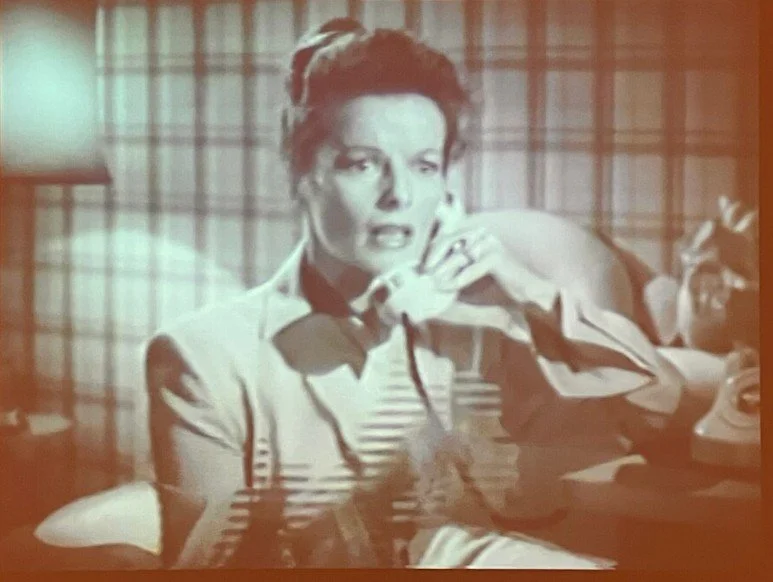
Figure 1. Christian Marclay, Telephones, 1995.
Visual artist and composer Christian Marclay’s Telephones (1995) is a 7 1⁄2-minute video composed of Hollywood film clips depicting the cyclical actions of dialing, answering, listening, and hanging up a landline phone. The work exemplifies Marclay’s broader practice of isolating and reconfiguring familiar cultural materials, especially through sound, gesture, and popular media. As the Seattle Art Museum notes, his practice operates at the intersection of sound and vision, as well as between mass-produced culture and the rarified museum space. Through careful translation and recombination, Marclay transforms these fleeting cinematic moments into objects of sustained attention, giving ephemeral media a tangible presence, as writer Holland Cotter observes. By repurposing cinematic fragments drawn from different genres and historical moments, Telephones constructs a fragmented yet rhythmic sequence that produces a sense of continuity without relying on narrative progression. Using theorist Irit Rogoff’s visual culture framework, this work demonstrates that meaning is contingent and subjective, emerging through viewers’ perception and prior cinematic knowledge, rather than through a single definitive interpretation. Art Historian Carol Duncan’s theory of the museum as ritual further shows how institutional display shapes how works are perceived, elevating them into objects of contemplation within a space. Together, these frameworks show how Telephones situates itself in an avant-garde context, inviting viewers to engage with cinematic gestures through their own experiences and expectations, which are shaped by the work’s spatial and institutional setting.
Telephones opens with the title card “Telephones (1995),” rendered in white type against a black screen, and unfolds through a sequence of black-and-white and color film clips, beginning with Martin Balsam’s character in Alfred Hitchcock’s Psycho, who enters a phone booth and dials a rotary phone. The montage progresses through the dialing of push-button phones, crescendos of ringing, and a range of emotional responses that generate a dynamic flow of action and sound. Marclay assembles these snippets from a wide cinematic archive, which includes appearances by Whoopi Goldberg in The Telephone and Sean Connery in an early James Bond. Marclay repeatedly combines gestures such as lifting the receiver, saying “Hello?”, and reacting through facial expressions throughout his work. These formal elements, which include sound cues, pacing, editing rhythms, and the juxtaposition of different telephone technologies, structure the work’s narrative. By isolating and sequencing everyday cinematic actions, Marclay transforms ordinary gestures into perceptual objects that reveal the rhythm, timing, and subtle nuances which are often overlooked in conventional film narratives, a phenomenon he described as “ubiquitous” in an interview with Ben Neill for Bomb Magazine. The video concludes with a pan-out of a woman gently hanging up the receiver, emphasizing the ordinary act as a moment of sustained attention.
Marclay’s Telephones can be understood through Irit Rogoff’s visual culture framework, particularly through her concept of the “curious eye,” which privileges uncertainty, recognition, and experiential meaning over authoritative interpretation. Rather than assuming a neutral or objective gaze, Rogoff emphasizes that visual experience is shaped by what viewers already know, remember, and bring with them to the act of looking. In Telephones, Marclay activates this mode of viewing through recurring actions that rely on viewers’ prior cinematic knowledge rather than narrative continuity. The presence of actors such as Cary Grant, Jimmy Stewart, Barbara Stanwyck, Grace Kelly, and Michael Keaton produce a sense of recognition that operates across films, genres, and historical moments. These recognizable personas prevent the gestures from functioning as purely formal repetitions. Instead, each action accrues meaning through context and juxtaposition, as familiar acts of dialing, answering, and hanging up are continually reinterpreted through viewers’ recognition of cinematic conventions and the accumulated associations attached to familiar actors.
This viewing experience exemplifies what Rogoff describes as curiosity as an “unsettling” condition oriented toward “things not yet quite understood or articulated,” where meaning remains open rather than resolved. Telephones sustains this unsettled state through an editing logic that extracts film clips from their original narratives and recombines them. The viewer is thus positioned as an active participant navigating recognition without certainty. He continually anticipates connections that are never fully confirmed. Meaning thus emerges through the encounter between image, context, and spectator, rather than residing securely within the work itself or its original cinematic sources. Familiar faces and scenes appear momentarily recognizable yet strangely out of place, detached from the narratives that would normally stabilize their meaning. This partial recognition sustains the unsettled curiosity Rogoff describes, and reinforces meaning as contingent, subjective, and continually produced through the act of viewing rather than fixed by a single authoritative reading.
Having established how the work engages the viewer through unsettled recognition, we can also consider how its museum installation shapes meaning. Viewed through Carol Duncan’s framework of the museum as ritual, Telephones gains significance from the spatial and curatorial choices at the Berkeley Art Museum and Pacific Film Archive (BAMPFA). Duncan argues that museums operate through “well-developed ritual scenarios,” often structured as art-historical narratives that unfold across a sequence of spaces, that frame and give meaning to individual works even when viewers engage selectively. In the context of the Object Oriented exhibition, Telephones is positioned among objects of ambiguous or hybrid function. This draws attention to form, use, and habitual perception. Surrounded by works that blur the boundary between utility and display, such as Scott Burton’s Table Chair and Stool and Fiona O’Connor’s Closed Down Clubs, Telephones is elevated as an object of contemplation. As Duncan notes, the museum renders objects “useless for any other purpose” than reflection. In this context, the gestures in Telephones are no longer transitional cinematic moments but sustained, meaningful actions that prompt viewers to reconsider how everyday gestures acquire significance within institutional space.
Scholars of visual culture emphasize that meaning is shaped not only through acts of viewing but also by the conditions under which images circulate and are institutionalized. Arts scholars Keifer-Boyd and Smith-Shank argue that visual culture operates across image, sound, movement, and modes of distribution, with meaning emerging through context rather than residing in fixed objects. If, as Duncan suggests, museums actively shape meaning through their spatial narratives and curatorial structuring of objects, then BAMPFA’s acquisition of Telephones can be understood as part of the institutional choices that condition how works gain cultural significance. From a visual culture perspective, acquisition shapes how moving-image works circulate, gain legitimacy, and enter new interpretive frameworks. As Rogoff notes, meaning in the visual field is contingent, socially produced, and deeply tied to institutional context: “This insistence on the contingent, the subjective and the constantly reproduced state of meanings in the visual field is equally significant for the institutional or disciplinary location of this work.” Thus, meaning arises from how the work is encountered and experienced.
Anchored in BAMPFA’s longstanding commitment to experimental moving-image practices, the 2004 acquisition of Telephones reflects both the museum’s collecting priorities in the early 2000s and Christian Marclay’s rising prominence within media and conceptual art. The work entered the museum through the support of Norma H. Schlesinger and the Andrew Paul Spiegel Fund, two donors whose ongoing contributions have significantly shaped BAMPFA’s contemporary collection. Schlesinger, a central figure in the Bay Area arts community and an early supporter of BAMPFA, consistently championed experimental and interdisciplinary practices through her involvement in the museum’s early development. She also provided sustained support for conceptually driven acquisitions, contributing to more than thirty works in the collection. This emphasis resonated with the Pacific Film Archive’s longstanding investment in avant-garde film since the 1960s. The Pacific Film Archive’s early commitment to avant-garde and international cinema had long established experimental moving-image practices as central to the institution. Marclay’s Telephones therefore fit naturally within BAMPFA’s dual identity as both an art museum and a film archive, extending a tradition of collecting and exhibiting boundary-crossing film and video work.
By the time BAMPFA acquired Telephones, the work had already circulated in prominent exhibitions, including its 2000 showing at The Polygon Gallery, where it was described as “a surprisingly cohesive video narrative.” Its exploration of everyday technology, reproduction, and media saturation resonated with debates in visual and media studies, signaling its critical relevance. Acquiring the piece allowed BAMPFA to deepen these scholarly conversations while subsequently reinforcing its identity as a collector committed to experimental moving-image practices. Telephones primarily circulated through artist- and gallery-directed channels rather than a complex private market. Marclay and his representative gallery, Paula Cooper Gallery, facilitated early museum placements, and several major institutions, including MoMA, acquired editions through philanthropic gifts from donors invested in conceptual and media art, such as Gwen and Peter Norton. This pattern reflects broader trends in video art acquisition during the 1990s and early 2000s, when limited-edition works, such as Telephones (issued as a Betacam-SP master with 250 DVDs), typically entered museums through donor support rather than secondary markets. In this context, the involvement of Norma H. Schlesinger and the Spiegel Fund highlights not only BAMPFA’s commitment to media art but also how donor networks shape which works enter an institution’s cultural narrative. Provenance, therefore, becomes part of Telephones’ institutional identity, revealing how acquisition, donor priorities, and curatorial vision collectively condition how viewers later encounter the work.
When placed together, Duncan’s and Rogoff’s frameworks reveal how Telephones produces meaning through both institutional structure and subjective visual experience. Rogoff’s concept of visual culture emphasizes the contingent, unsettled nature of meaning as it emerges through recognition, memory, and prior knowledge, positioning the viewer as an active participant rather than a passive recipient. Duncan, by contrast, demonstrates how the museum organizes and authorizes this encounter through ritualized spatial and curatorial frameworks that elevate certain forms of looking over others. In Telephones, these dynamics operate simultaneously: the museum does not fix the work’s meaning, but it establishes the conditions under which Rogoff’s “curious eye” can function. The viewer’s recognition of familiar cinematic gestures and star personas unfolds within an institutional setting that suspends narrative utility and privileges contemplation. Together, these frameworks clarify how Telephones operates not simply as a compilation of film clips, but as a visual culture object whose meaning is continually produced through the interaction of image, viewer, and institution.
By analyzing Telephones through the combined frameworks of visual culture and museum studies, this paper has shown how Christian Marclay’s work operates as more than a formal experiment in montage or a commentary on cinematic convention. Instead, Telephones emerges as a visual culture object whose meaning is shaped through contingent acts of viewing and institutional framing. Rogoff’s emphasis on subjective, unsettled meaning reveals how viewers actively construct significance through recognition and prior knowledge, while Duncan’s theory of the museum as ritual demonstrates how institutional contexts organize and legitimize these encounters. At BAMPFA, Telephones is transformed from a sequence of cinematic fragments into an artwork that foregrounds everyday gestures as objects of sustained attention. Meaning does not reside solely in the original films, the artist’s intent, or the museum’s authority, but is continually produced through the interaction of image, viewer, and institution. In this way, Telephones exemplifies how visual culture reinforces the role of museums not as neutral containers of meaning but as active participants in its ongoing production.
-
1 “Christian Marclay,” SAM Magazine (Seattle Art Museum), Spring 2004.
2 Holland Cotter, “An Artist Makes Music Touchable,” New York Times, October 13, 2003, Arts section.
3 Ben Neill, “Christian Marclay,” Bomb 84 (Summer 2003): 49.
4 Irit Rogoff, “Studying Visual Culture,” in The Visual Culture Reader, ed. Nicholas Mirzoeff (London: Routledge, 1998), 26.
5 Rogoff, “Studying Visual Culture,” 28.
6 Carol Duncan, “The Art Museum as Ritual,” in The Art of Art History: A Critical Anthology, ed. David Preziosi (Oxford: Oxford University Press, 1998), 428.
7 Duncan, “The Art Museum as Ritual,” 430.
8 Karen Keifer-Boyd and Deborah Smith-Shank, Born Digital Visual Culture (New York: Routledge, 2017).
9 Rogoff, “Studying Visual Culture,” 25.
10 Kenneth Baker, “Norma Schlesinger, Devotee of Bay Area Art, Dies,” SFGate, December 6, 2009, https://www.sfgate.com/bayarea/article/Norma-Schlesinger-devotee-of-Bay-Area-art-3211290.php.
11 Christian Marclay, Telephones, 1995, exhibition, The Polygon Gallery, North Vancouver, BC, September 2–October 28, 2000, “Telephones: Christian Marclay,” The Polygon Gallery, https://thepolygon.ca/exhibition/telephones-christian-marclay/.
12Peter Norton, “Peter Norton,” Wikipedia, last modified November 1, 2025, https://en.wikipedia.org/wiki/Peter_Norton.
13 Rogoff, “Studying Visual Culture,” 28.
-
Baker, Kenneth. “Norma Schlesinger, Devotee of Bay Area Art, Dies.” SFGate, December 6, 2009. https://www.sfgate.com/bayarea/article/Norma-Schlesinger-devotee-of-Bay-Area-art-3211290.php.
Berkeley Art Museum and Pacific Film Archive (BAMPFA). “Mission, Core Values, and History.” Accessed December 13, 2025. https://bampfa.org/about/history-mission.
“Christian Marclay.” SAM Magazine (Seattle Art Museum), Spring 2004.
Cotter, Holland. “An Artist Makes Music Touchable.” New York Times, October 13, 2003, Arts section.
Duncan, Carol. “The Art Museum as Ritual.” In The Art of Art History: A Critical Anthology, edited by David Preziosi, 427–40. Oxford: Oxford University Press, 1998.
Keifer-Boyd, Karen, and Deborah Smith-Shank. Born Digital Visual Culture. New York: Routledge, 2017.
Marclay, Christian. Telephones. 1995. DVD (edition of 250) and Betacam-SP master. University of California, Berkeley Art Museum and Pacific Film Archive.
Marclay, Christian. Telephones. 1995. Exhibition, The Polygon Gallery, North Vancouver, BC, September 2–October 28, 2000. “Telephones: Christian Marclay.” The Polygon Gallery. https://thepolygon.ca/exhibition/telephones-christian-marclay/.
Norton, Peter. “Peter Norton.” Wikipedia. Last modified November 1, 2025. https://en.wikipedia.org/wiki/Peter_Norton.
Rogoff, Irit. “Studying Visual Culture.” In The Visual Culture Reader, edited by Nicholas Mirzoeff, 25–36. London: Routledge, 1998.
