
Bodies Remembered, Bodies in Mourning
Memorials of the Vietnam War in the U.S. and Vietnam
Written By: Ceci Mestre
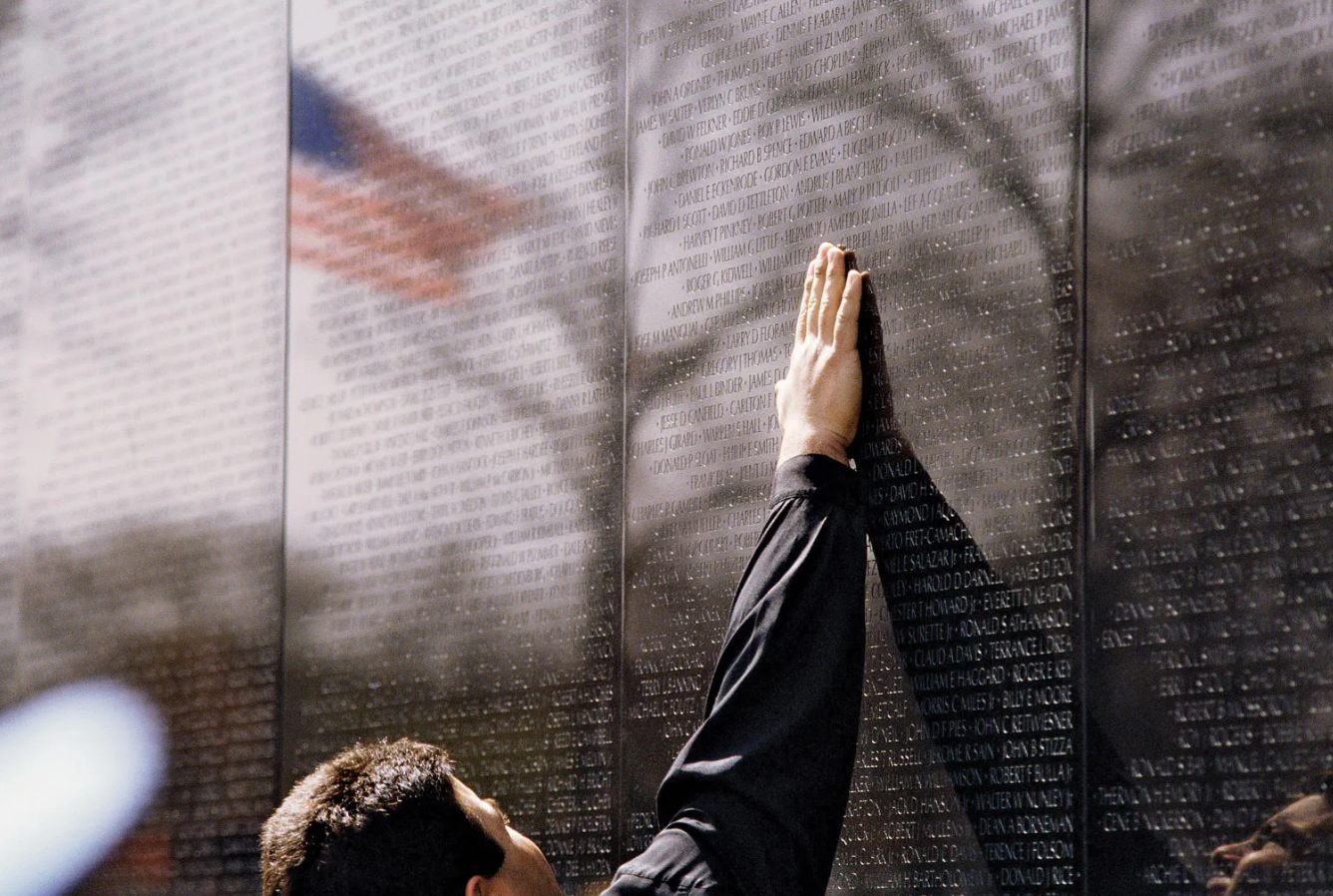
Vietnam Veterans Memorial
Upon their return from the Vietnam War, American veterans of this controversial conflict felt invisible and unappreciated. The idea of constructing a memorial was not an obvious or popular one, but in 1979, four years after the end of the war, Vietnam War veteran Jan Scruggs founded the Vietnam Veterans Memorial Fund (VVMF) and began to lobby for the construction of a memorial on the National Mall in Washington, D.C. Building a memorial to a war that had become massively unpopular in the U.S. posed a challenge. Scholar of the politics of American cultural memory Marita Sturken writes that “the battle over what kind of style best represents the war was, quite obviously, a battle over the representation of the war itself.” The fierce debates related to the memorial’s design ultimately resulted in three memorials to the Vietnam War on the National Mall—all reflecting a desire to “heal” from the war, but doing so in ways that both represent bodies and engage the bodies of visitors in different ways. After hosting an open design competition in 1980, the VVMF selected the design of Maya Lin, a Chinese American undergraduate studying architecture at Yale, as the winner (fig. 1). Her design faced immediate backlash, partly due to the lack of figural representation, which makes the question of bodies a necessary one for understanding this memorial. This paper will focus on bodies that are negotiated and reinterpreted by postwar American discourse, exploring both how they are or are not represented in memorials and the way bodies interact with these spaces. I also hope to bridge studies of memorials in the U.S. with those in Vietnam. While interested in the presence of bodies at these memorials, this paper also seeks to highlight what different memorialization practices reveal about the memory of the Vietnam War. Vietnam War memorials in the U.S. and Vietnam, regardless of whether or not they include figural representation, are sites that reveal tensions in the countries’ reconciliation processes and are continually shaped by the people who interact with them.
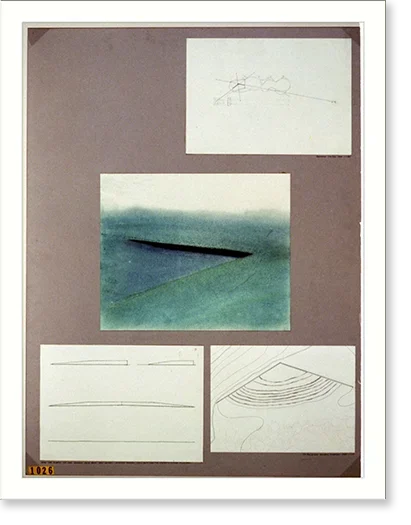
Figure 1. Maya Lin. Design for Vietnam Veterans Memorial. Maya Lin Studio, https://www.mayalinstudio.com/memory-works/vietnam-veterans-memorial.
For their open design contest, the VVMF gave few specifications about the actual design for the memorial, but hoped that it would honor those who had participated in the Vietnam War, anticipating that “[t]hrough such a recognition the nation will resolve its history fully.” After Lin’s design was selected, Vietnam War veteran Tom Carhart called it a “black gash of shame and sorrow.” Criticisms leveraged against the design focused on its lack of figural representation. American journalist Tom Wolfe wrote that veterans expected “a realistic statue dramatizing the anguish and intimate bonds of the men who fought against horrifying odds in the bush in Vietnam—something that would announce, symbolically, that the accusing finger was no longer pointed perversely toward them.” Both critics and the VVMF imagined that a memorial to the Vietnam War could serve as a place to foster a rethinking of the role of soldiers in this conflict. Critics of the final design, however, had anticipated that the visual language of the memorial would follow in the footsteps of other memorials on the Mall—which could mean white, vertical rather than horizontal, above ground, and possibly featuring figural representations. In an article defending Lin’s design, Washington-based art critic Benjamin Forgey wrote that the figurative schemes submitted to the contest were “too specific. They limit the range of possible responses.” He was also skeptical of the entries that turned to traditional symbols like plinths and columns, writing that these felt cliché and unable to say much in the context of the Vietnam War. However, he praises Lin for creating a memorial that carves into the earth, rather than a vertical abstraction like the towering obelisk of the Washington Monument.
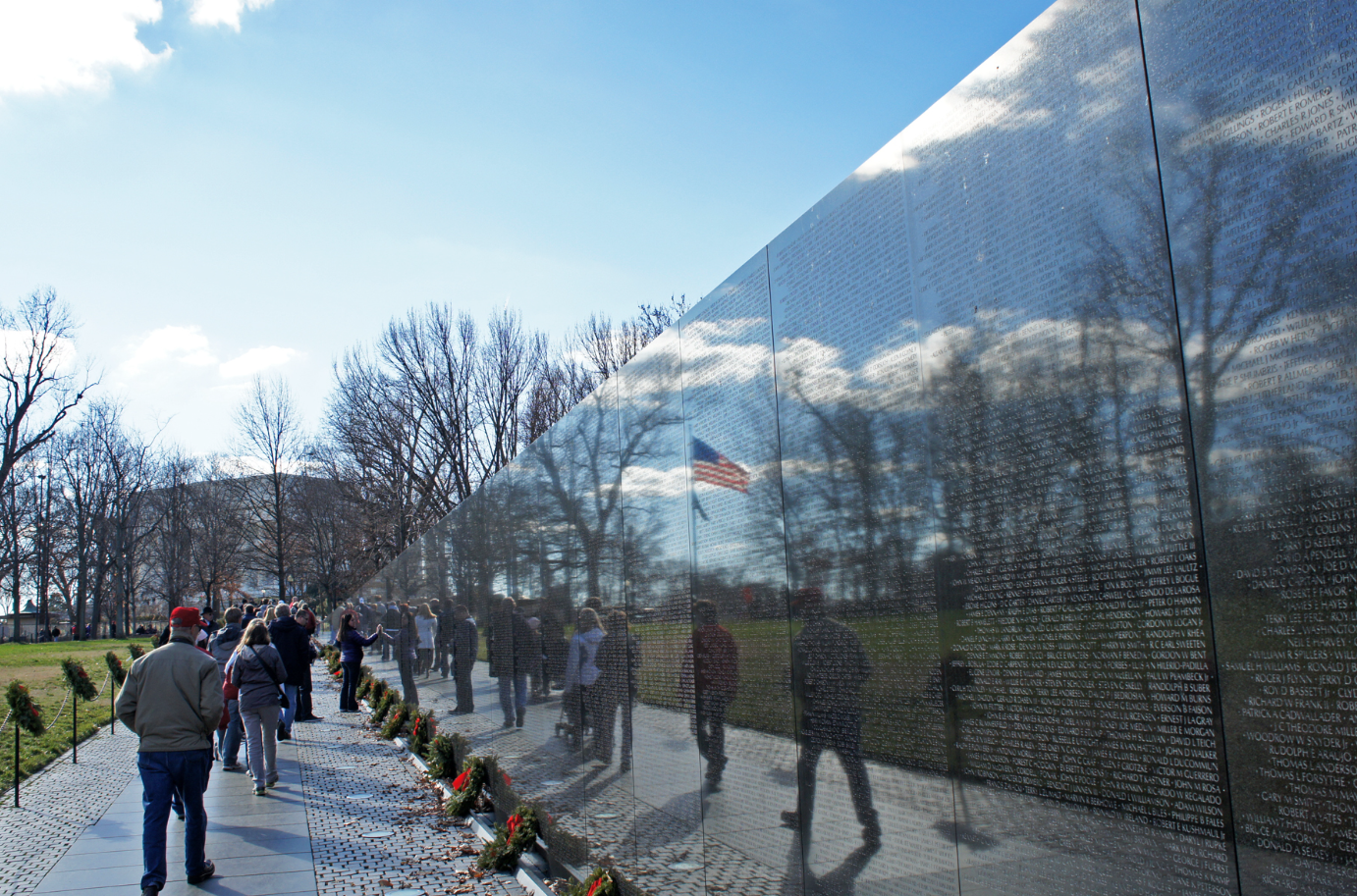
Figure 2. Vietnam Veterans Memorial. Maya Lin, 1982, black granite, Washington, D.C. Photograph by Mario Roverto Durán Ortiz, 2011, https://en.wikipedia.org/wiki/Vietnam_Veterans_Memorial#/media/File:US_flag_reflexion_on_Vietnam_Veterans_Memorial_12_2011_000124.JPG.
With the lack of figural representation built into the memorial, the visitors’ bodies take on an additional centrality. Lin imagined the memorial as a place for quiet and individual reckoning with the war’s deaths, writing in her proposal that it is “up to each individual to resolve or come to terms with this loss. For death is in the end a personal and private matter.” So, although the Vietnam Veterans Memorial does not represent bodies, it does invoke and include them in a way that can fulfill Lin’s function of each person carrying out loss in their own way. The wall’s reflective surface and the inclusion of over 58,000 names of the war dead are two key design elements in the invocation of bodies (fig. 2). Viet Thanh Nguyen explores the sense of ambivalence that can emerge at the wall, comparing it to both a mirror and a barrier. According to Nguyen the wall captures an otherness shared by the living and the dead:
[T]he wall captures how the dead belong to the living as their own but are also irrevocably other. And yet that otherness—the mystery and terror of death that is embodied by the dead—is one that will inevitably be shared by the living, who sense the otherness of their own inevitable mortality calling to them from behind that black wall.
David Burton, a Vietnam War veteran, spoke about the wall, despite its association with death, as being “alive,” and that when he saw his reflection, “I was among them, looking out.” The overlap of the names of the dead and bodies of the living that occurs when one faces the wall creates a powerful sense of connection to the dead and the past, blurring time as those in the present moment face those who are forever relegated to the nearly twenty-year-long period of the war. The wall opens up a new space in time where the dead and the living are reunited.
Despite scholars Karal Ann Marling and Robert Silberman’s criticism that the wall is “too final, too impersonal…too grandly dramatic to find room for the ordinariness of flesh-and-blood survivors,” the interactions that take place at the wall speak to a different assessment. Although the wall doesn’t recognize those who died from lasting complications due to the war, Sturken writes that “the memorial is as much about survival as it is about mourning the dead.” Even though the names of living veterans are not inscribed on the wall, in visiting this space, they can see their bodies reunited with those they knew. Touch is an important element of visitors’ experiences at the wall, with people reaching out to place their hands on the wall, bringing the rest of their body just inches away from the thousands of names. American Studies scholar Patrick Hagopian writes, “The wall’s surface seemed to some a thin, impenetrable screen separating this world from another, where the troops lived on, still young. By touching the wall, one could brush one’s fingertips against theirs.”
Another haptic practice is taking rubbings by placing a piece of paper over a particular name and rubbing over it with charcoal. One veteran spoke about how taking rubbings is a way to “bring them [the dead] back to life.” Another veteran said that making rubbings of names “Made [him] think of them again. That’s what it’s all about, remembrance.” In taking rubbings, veterans can bring a reminder of the wall, the dead, and the remembrance and healing that occurred at the wall with them.
The names on the wall are organized in a circular-chronological order, with the first deaths from 1959 starting in the center and moving out toward the right, to then circle back at the left-most end of the wall and moving inwards, with the final deaths from 1975 meeting those from 1959 at the center. Organizing the names in chronological rather than alphabetical order allows visitors to look at clusters of names and remember particular moments in the war. Although critics argued that the deaths on the wall are reported as if they were victims in a car accident, the ability to read the names in a way that recalls specific instances of the war and places these deaths in the history of U.S. involvement in Vietnam complicates this appraisal. Scruggs, the veteran who founded the VVMF, has spoken of the difficulty of focusing on a group of names and being reminded of the moment of their deaths. In one video, as he touches several names on the wall, he says that focusing on a group of names is “very difficult” and something he had only done once before over the course of almost 40 years. He says “all these guys who died on this day, I saw them die. I was with them, and all these guys, they were all laying on the ground.” Simply placing names in this order brings forward these moments of war and images of specific bodies.
Although memorials are designed by artists and architects, they are also informed and continually shaped by the people who visit them—they aren’t just the property of those who create them and instead form a multicentric tradition of commemoration. It’s common for people to leave objects ranging from what you would find at a cemetery or soldier’s grave like flags, flowers, and letters, as well as objects that speak to the camaraderie formed while deployed, like beer and cigarettes. With people travelling across the country to visit this memorial, it has become like a pilgrimage site with its own set of practices and rituals. Veterans can signal their participation in the war through wearing hats that say “Vietnam Veteran.” In coming to the wall, people can leave offerings to the dead and feel reunited with them. One mother recounted how touching the wall made her feel that her son “was there with me.”
Even though the VVMF’s competition booklet stated they wanted to avoid taking a stance on the Vietnam War, it’s misleading to characterize the wall as apolitical. Just as memorial sites help dictate what we remember, they also contribute to whom and what we forget. In choosing to focus on veterans, as Hagopian argues, the wall secures public sympathy for those who fought to disarm political critiques of the war. While Sturken believes the wall does not take a stand on the specific controversies of the war, she recognizes that it lends itself to creating a narrative of the war that allows “the discourse of heroism, sacrifice, and honor to resurface.” With the circular-chronological ordering of names, the war is presented as “complete,” making it easier to keep its controversies in the past rather than address its ongoing impacts. However, the presence of veterans and families of the dead whose reflections in the wall speak to the lasting connection between the past and present complicates this idea. Still, the wall is framed as a site for quiet introspection, making the war something for individuals to personally confront instead of the nation that had a hand in millions of deaths.
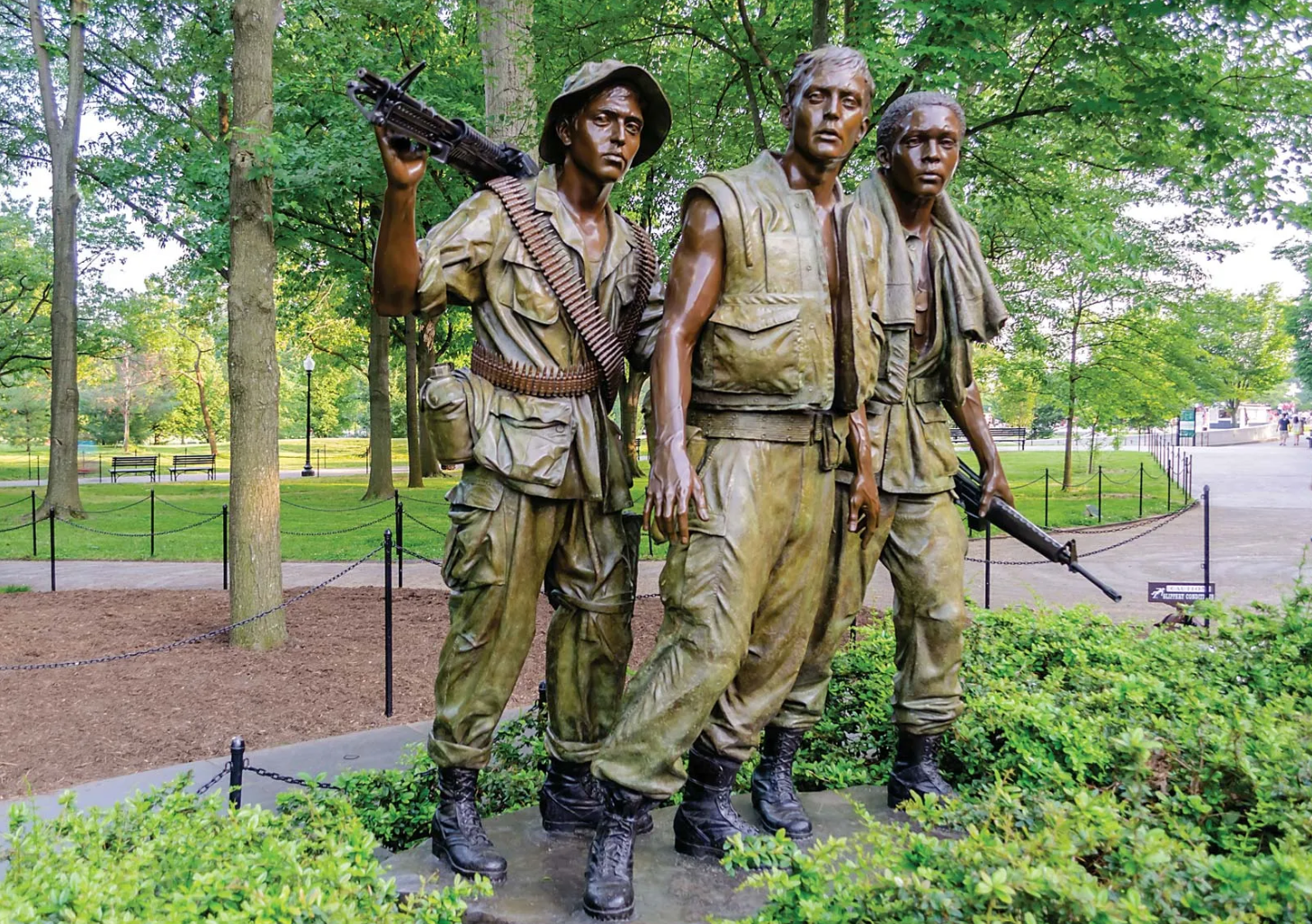
Figure 3. Frederick Hart, Three Servicemen, 1984, bronze, National Mall, Washington, D.C., https://www.britannica.com/topic/Vietnam-Veterans-Memorial
The critiques of Lin’s design eventually led to a compromise in which a representative sculpture was added to the National Mall in 1984. The Three Servicemen sculpture (fig. 3), designed by Frederick Hardt, depicts three soldiers—one black, one white, and one Latino. Although Hart used models, none of the figures in the group are meant to represent any one particular person. Hart hoped the statue would elevate veterans and help them be “acknowledged and understood.” While Lin’s memorial sought to do something similar, Hart hoped to accomplish this through a realism that reflected different ideas about the legacy of the war. Though he recognized the difficult emotions veterans experienced in the war, he hoped this figural representation would convey “wistful longing for the past and an urgent beckon to fight for the future”—phrasing that moves this sculpture out of the realm of mere respect for the veterans and into a justification of the war.
Through the inclusion of the Three Servicemen, the different sides of the debate over the war’s memorialization were hoped to be appeased, but figural representations raise their own issues. Hagopian writes that the unintended result of Hart’s close attention to detail was bringing “home the absence of the many groups who are not represented in the statue.” The next sculpture added to the memorial was proposed by Diane Carlson Evans, who served as a U.S. Army nurse during the Vietnam War. She felt that women’s role in the war deserved more recognition, and although her appeals were met with the response that the Three Servicemen memorial was meant to represent everyone, an issue with figural representation is that it’s difficult to imagine a female body as being represented by a male one.
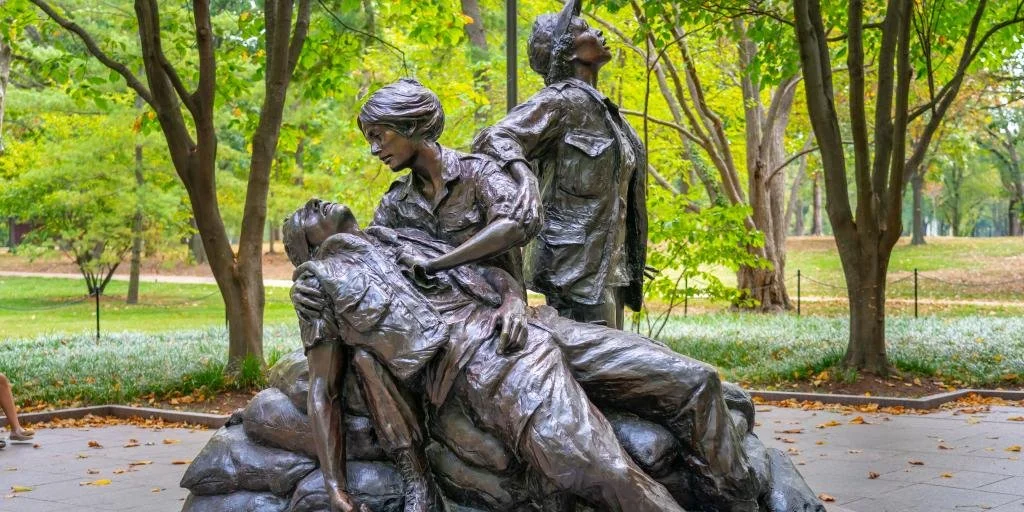
Figure 4. Glenna Goodacre, Vietnam Women’s Memorial, dedicated 1993, National Mall, Washington, D.C., Veterans Day Marks 30th Anniversary Of Vietnam Women’s Memorial | VA Montana Health Care | Veterans Affairs
In 1988, the Vietnam Women’s Memorial Project, led by Evans, was told they were allowed to erect a memorial and in 1998 the Vietnam Women’s Memorial, a realistic bronze sculpture designed by Glenna Goodacre, was dedicated (fig. 4). One video published by the VVMF states that the Vietnam Women’s Memorial “allows families who lost loved ones to know about the women who provided comfort, care, and a human touch to the suffering and dying.” The memorial creates an idealized image of the touch necessary for healing, showing a calm nurse attending to a body that displays no visible injury. Hagopian argues that this memorial allows nurses to not only tend to the wounds of the soldier but also to a confused and struggling society grappling with the memory of the war. Neither this memorial nor the Three Servicemen invite the same kind of touch as the wall, especially the Three Servicemen statue which is surrounded by bushes that create several feet which visitors would have to reach across to be able to touch them, also making it harder to leave objects. Despite the factors that make the Vietnam Women’s Memorial less inviting in this way, the wounded soldier’s finger is visibly lighter than the rest of his body, demonstrating that people have reached out to touch it. By touching the soldier’s finger, visitors can also view themselves as comforting those wounded by the war. While Hagopian wrote this in reference to other Vietnam War memorials in the U.S., it rings true for the Vietnam Women’s Memorial—“Instead of a rhetoric of conflict, these memorials use a subtler armory: the language of sentiment, articulating themes of recovery and reconciliation.”
These sculptures, which represent types rather than specific people, have a different effect than the wall, which, though lacking figural representation, invokes the bodies of the over 58,000 dead. Despite their differences to the wall, all three memorials serve as sites that emphasize the contribution of the people who served in the war rather than the war’s divisions and controversies.
All three memorials, however, blur ideas of time—for example, Silberman and Marling wrote of the Three Servicemen as existing in a historic limbo, that they have “crossed over the line between the quick and the dead” and now stare out at the names on the wall. While for veterans or others familiar with the war’s history, the wall might be a more effective way to be brought back to particular moments in time, for people with less of a connection to the history of the war, these figural representations might be more successful in bridging the past and the present as different stories can be projected onto these more generic images that aren’t tied to specific people or moments in the war.
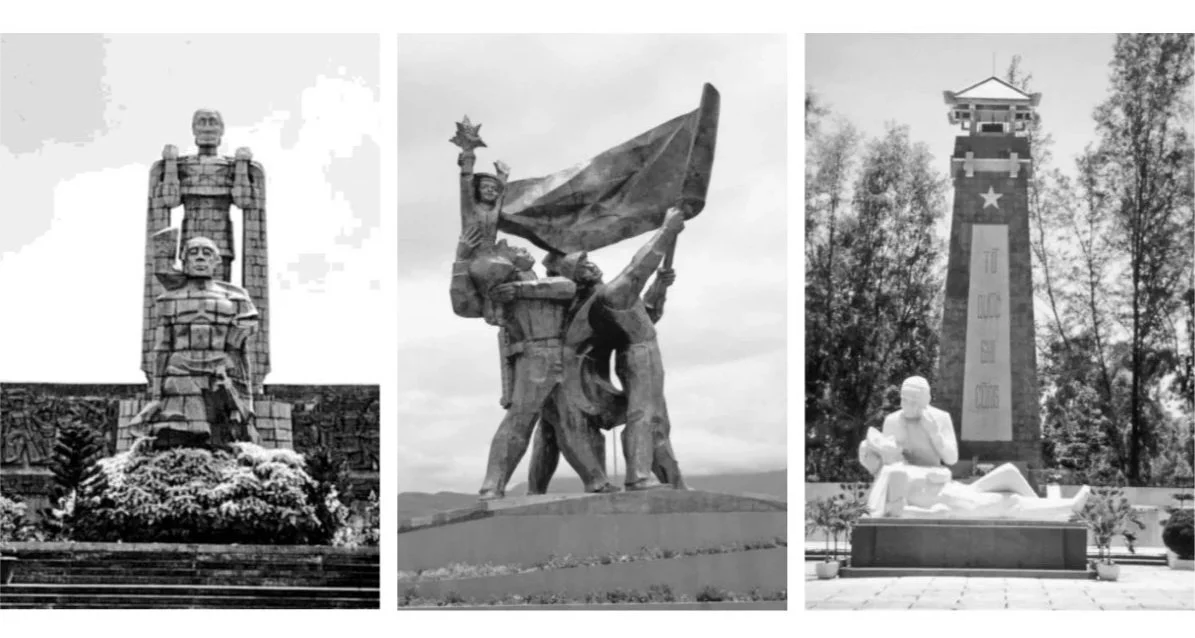
Figure 5. Nguyễn Hải, Bà Mẹ Tổ Quốc (Mother Việt Nam), Hồ Chí Minh City Martyrs’ Cemetery, 2000. Photograph by Christina Schwenkel in The American War in Contemporary Vietnam.
Figure 6. Nguyễn Hải, Victory monument at Ðiện Biên Phủ. Photograph by Christina Schwenkel in The American War in Contemporary Vietnam.
Figure 7. Refurbished Củ Chi district martyr cemetery, Ho Chi Minh City. Photograph by Chrstina Schwenkel in The American War in Contemporary Vietnam.
Vietnam War Memorials in Vietnam
In the U.S., the Vietnam Veterans Memorial emerges as the primary memorial to the war, despite there being other memorials throughout the country. In Vietnam, however, a more diffuse, to use Rosalind Shaw’s term, memoryscape exists. Although scholars have explored different commemorative practices in Vietnam to the American War, as it is referred to there, I will focus primarily on martyrs’ cemeteries. These cemeteries lend themselves to comparisons with the Vietnam Veterans Memorial as they also highlight the contributions made by those who died while part of the armed forces, and because the cemeteries and the Wall were, in many instances, constructed during similar time periods. Similar to the U.S., tensions still exist in Vietnam related to the memory of the war and memorials remain contested sites of diverse meanings and practices.
The memorialization in Vietnam of the American War has been shaped by revolutionary doctrine, which preached against practices perceived as superstitious, like ancestor worship, and aimed to instead create secular memorials. Monuments built following the war were intended to legitimate and glorify the struggle for the revolutionary cause; they were not meant to be places to care for the souls of the dead with incense or other offerings. Initially, soldiers’ deaths were celebrated over the deaths of village women and children, who the state did not view as desirable in the postwar construction of national memory. Since the 1990s, however, the political and economic state of Vietnam has changed, leading to greater tolerance from the state of family ancestral worship. While some scholars argue that there has been a shift from state-administered sites of worship to sites of ancestral worship, Christina Schwenkel argues for transcending divisions between state and non-state memory and “for paying more attention to the ways in which secular state reconciliation and ritual propitiation inform and constitute one another in particular communal and state sites of memory.” In martyrs’ cemeteries, both secular state practices and ritual ones are present—these are spaces of ancestor worship through practices like burning incense and prayer, but are also full of state-sponsored statues and design elements. This coexistence shapes visitors’ engagement at these cemeteries.
A relevant ongoing tension in Vietnam’s memorialization practices is the view many Vietnamese people hold of certain practices, especially those associated with the state, as foreign, frequently associating them with the legacy of French colonialism, while other practices are seen as more traditionally Vietnamese. Following the war, the state built many monuments that Vietnamese people considered foreign, like statues and obelisks, which were frequently included in martyrs’ cemeteries. In response, rather than replacing these “non-Vietnamese” designs and aesthetics, they were instead merged with aesthetics viewed as more traditionally Vietnamese, which resulted in the construction of temples and pagodas. Martyrs’ cemeteries are places where these different visions of commemoration have played out, becoming sites of diverse commemorative practices where the dead are both venerated as souls in need of care and as dead remembered for their sacrifice for the nation, and where varied visual languages emerge.
One strand of commemoration in cemeteries that, based on interviews she conducted in Vietnam, Schwenkel states are frequently viewed as foreign are statues. These statues can be classified as works of socialist realism, inspired by the Soviet Union, that sought to depict the revolutionary spirit of the masses “in order to educate, lead, and inspire them” (figs. 5, 6, 7). Unlike the sculptures in the U.S. by Goodacre and Hart, these sculptures are typically considerably larger than life size. Schwenkel writes that “official memorial practices and their representation in monumental form work to publicly and visually reaffirm the role and right of the state to conscript citizen bodies to serve in defense of the nation.” The size of these statues along with their placement in the cemeteries of soldiers who died in defense of the nation works to fulfill this effect. Though the Three Servicemen statue in the U.S. is not as large as many of the statues found in Vietnam, its distance from the viewer allows it to similarly communicate nationalist messages that celebrate the sacrifice of those the sculpture represents. An additional similarity to the sculptures found in cemeteries is that the gaze of the men in Three Servicemen lands on the wall, which keeps the names of the dead at the forefront. In Vietnam, these heroic but generic forms, which are not meant to represent a particular person, viewed in tandem with the graves of the dead, highlight the meanings the state wishes to assign to these deaths while also showing the state’s power to bring people into the war effort.
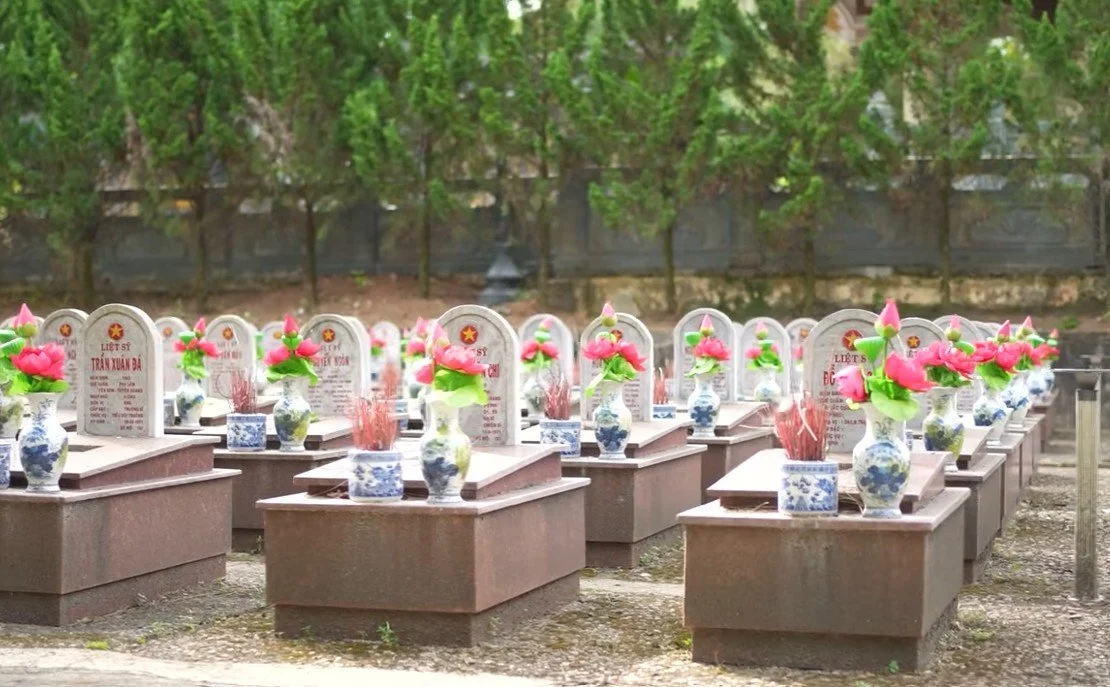
Figure 8. Truong Son Martyrs Cemetery. Screenshot from “Truong Son Martyrs Cemetery – the Value of Peace,” https://www.youtube.com/watch?v=wL4ZrBImGPQ&t=1810s.
One of the largest martyrs’ cemeteries in Vietnam is the Trường Sơn Cemetery, with over 10,000 people buried there (figs. 8 and 9), built for liệt sĩ (meaning “martyrs” or “fallen soldiers”) killed on the Ho Chi Minh Trail. Nguyen writes that the quiet of Vietnamese war cemeteries masks the reality of how soldiers’ deaths occurred; the organized rows of graves make it easy to forget the heaps of bodies with mangled limbs and violent wounds that characterized the years of warfare. This analysis rings true in some ways for the Vietnam Veterans Memorial, as a quiet space with ordered names, but is also complicated by the clusters of names that can so immediately bring veterans back to particular moments of the war. Reflecting a similar idea about the idealization created at cemeteries, in one video filmed in the Trường Sơn cemetery, Tran Quanh Minh says that the solemn formation of the rows of graves reminds him of the “formation of a company still standing at attention in the light of the Trường Sơn Forest.” The gravestones are organized by the province in which the deceased was from. This doesn’t allow for the same retelling of moments in the war that emerges at the Vietnam Veterans Memorial but does highlight the unity of the country in this war effort and makes it easier to imagine the dead as the idealized troops Minh compares them to.
Although martyrs’ cemeteries are clearly linked to the war’s legacy, they are also sites of ancestor worship, allowing them to move beyond their connection to the war and into the larger Vietnamese practice of attending to one’s ancestors. As sites of ancestor worship, people care for the deceased through lighting incense, cleaning graves, and bringing offerings like food. Visitors to the Vietnam Veterans Memorial in D.C. frequently remark upon feeling connected to the dead; at cemeteries in Vietnam, visitors also feel the presence of the dead. The beliefs that the realm of spirits and ancestors mirror the human world and that there’s a reciprocal relationship between the living and the dead inform the way visitors inhabit this space, encouraging them to think about familial connection in addition to the sacrifices related to the war. Previously, I explained how time blurs at the Vietnam Veterans Memorial on the National Mall. Here in Vietnam, planes of existence are blurred as both the deceased and the living benefit from these visits. Ông Hồ Tất Ái, who formerly worked at Trường Sơn, spoke about how young people will come to the cemetery to pray for luck on their exams or just general luck. So even though the state wanted martyrs to be remembered, not worshipped, the actions performed at cemeteries complicate this.
Schwenkel contrasts how “foreign” memorial sites like statues at these cemeteries might be vacant and “cold” (without burning incense), while visitors will keep altars and graves warm and attend to them with fruit and fresh flowers. Burning incense makes scent a more important part of the somatic experience at these sites and also creates a way for visitors to mark the memorialization practices they approve of within the Vietnamese memoryscape. Lighting incense at cemeteries also becomes part of the process of transnational healing—for example, in 2023, the U.S. ambassador to Vietnam visited a cemetery with Vietnamese officials and lit incense together.
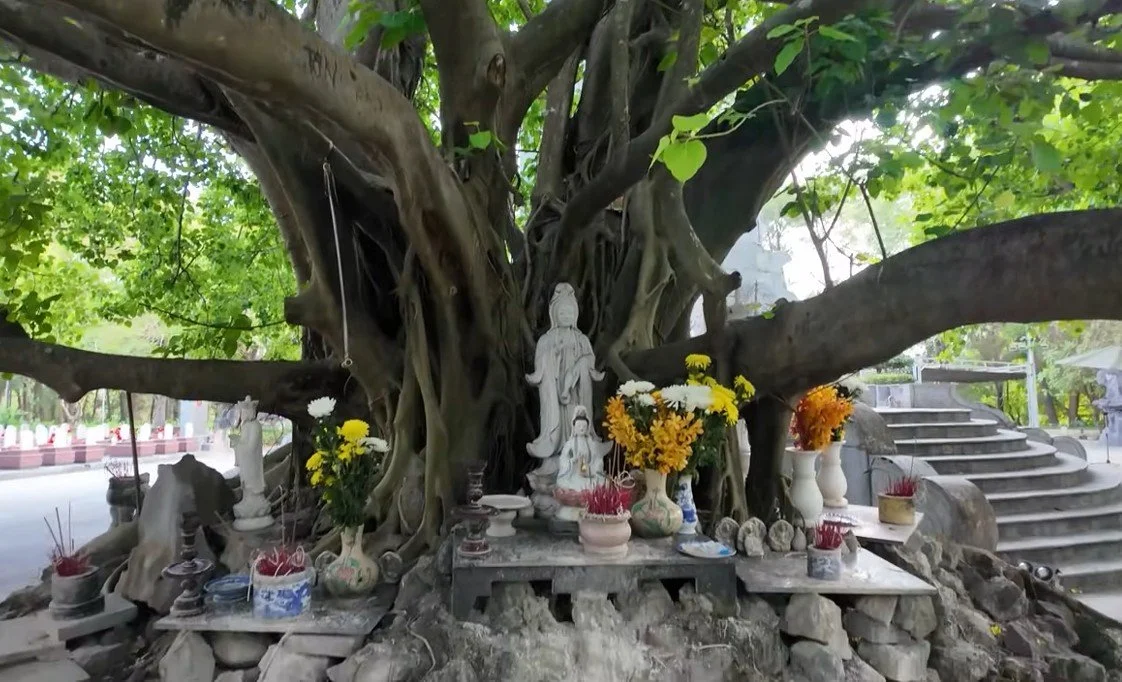
Figure 9. Truong Son Martyrs Cemetery. Screenshot from “Truong Son Martyrs Cemetery – the Value of Peace,” https://www.youtube.com/watch?v=wL4ZrBImGPQ&t=1810s.
In his video at Trường Sơn Cemetery, Minh says that for the soldiers, “the homeland was more than just a map…it’s the comrades in arms, it’s the one lying next to you in this cemetery.” A common metaphor is to view the country as a body. In these cemeteries, the dead allow for this union of the nation’s body, and their losses can be reframed as a necessary sacrifice for the vitality of a nation. This applies to the unburied as well. Minh speaks about how the hundreds of bodies never returned “lie buried in this vast Trường Sơn mountain range like blood vessels dissolving into the earth, forming a solid foundation for a nation rising from the ruins of bombs and bullets.” With time, some of the visual reminders of the war have faded from the landscape, but the perspective of being one of the sites of the war still informs the country’s memoryscape, converting regular sites into possible memorials of the war.
Like at the Vietnam Veterans Memorial, visitors at cemeteries can both single out the people they have a connection to and feel overwhelmed by the sheer number of deaths. While both the Vietnam Veterans Memorial and cemeteries encourage walking, the greater distance one must traverse at a cemetery like Trường Sơn and knowing that this is just one cemetery of many converts the cemetery into a visualization of the absence of those whose lives frequently ended at 19 or 20. The actual amount of space the cemetery takes up becomes a way to imagine the space that would have been occupied by the living. Although the dead are present through their remains, their actual bodies remain shrouded by the tombs. In this way, we can draw an additional similarity to the Vietnam Veterans Memorial, where the dead are invoked through their names, and the only visible bodies are those of the visitors.
While in the U.S., the Vietnam Veterans Memorial had to be a site to think about those who died without necessarily resolving the controversies surrounding the war, in Vietnam, as the victors, cemeteries, as well as the country’s landscape, can inspire greater feelings of patriotism and pride. Minh says the cemetery reminded him about “not letting down those who fell in the great war of national defense of the Vietnamese people.” If, as Peter Ehrenhaus has noted, the act of commemoration “entails reaffirming the legitimacy of purpose for which a community has issued its call for sacrifice,” then cemeteries are able to carry out that affirmation. Although these sites can further specific political goals, just as in the U.S., the spaces are continually informed by the people who visit them and leave with their individual understandings.
Conclusion
Memorials in the U.S. and Vietnam remain contested sites subject to criticism based on their visual language. While these sites are constructed with particular goals in mind, taking into account the personal experiences visitors have allows us to highlight how memorials are part of a multicentric tradition of commemoration. Though diverse and divergent memories of the war exist in both countries, memorials can similarly encourage visitors to slow down, touch what’s around them, leave offerings, and reflect on the dead and their connection to the present. While political motivations have dictated the bodies that get commemorated, with South Vietnamese forces having very little presence in either American or Vietnamese memorials, the presence of visitors allows for an opening up of the commemorative practice.
-
1 Marita Sturken, “The Wall, the Screen, and the Image: The Vietnam Veterans Memorial,” Representations no. 35 (1911): 126, https://doi.org/10.2307/2928719.
2 “The Vietnam Veterans Memorial Design Competition,” (Vietnam Veterans Memorial Foundation, 1980), 5, https://www.vvmf.org/userfiles/files/PDF/1980%20Design%20Competition%20Booklet.pdf.
3 Tom Carhart, “Insulting Vietnam Vets,” The New York Times, October 24, 1981, 23, https://www.nytimes.com/1981/10/24/opinion/insulting-vietnam-vets.html.
4 Tom Wolfe, “Art Disputes War: The Battle of the Vietnam Memorial,” The Washington Post, October 12, 1982, https://www.washingtonpost.com/archive/lifestyle/1982/10/13/art-disputes-war-the-battle-of-the-vietnam memorial/89ef84dc-00d8-42ce-bfa8-318f51ea15c5/.
5 Benjamin Forgey, “Model of Simplicity,” The Washington Post, November 14, 1981, https://www.washingtonpost.com/archive/lifestyle/1981/11/14/model-of-simplicity/3737070e-cda9-43e0-b813- a7bef38d9393/.
6 Forgey, “Model of Simplicity.”
7 Forgey, “Model of Simplicity.”
8 Maya Lin, Design for Vietnam Veterans Memorial (Maya Lin Studio), https://www.mayalinstudio.com/memory works/vietnam-veterans-memorial.
9 Viet Thanh Nguyen, Nothing Ever Dies: Vietnam and the Memory of War (Harvard University Press, 2016), 52, https://www-jstor-org.proxy.library.georgetown.edu/stable/j.ctvjk2xtq.
10 David Burton quoted in Patrick Hagopian, The Vietnam War in American Memory: Veterans, Memorials, and the Politics of Healing (University of Massachusetts Press, 2009), 358, https://www-jstororg.proxy.library.georgetown.edu/stable/j.ctt5vk0pt.
11 Karal Ann Marling and Robert Silberman, “The Statue near the Wall: The Vietnam Veterans Memorial and the Art of Remembering,” Smithsonian Studies in American Art 1, no. 1 (1987): 13, http://www.jstor.org/stable/3108969.
12 Sturken, “The Wall, the Screen, and the Image,” 129.
13 Hagopian, The Vietnam War in American Memory, 358.
14 WBNS 10TV, “Veterans find solace in honoring friends at Vietnam Memorial,” November 11, 2025, 2:04, https://www.youtube.com/watch?v=pSZ1Fytup-o.
15 “Veterans find solace in honoring friends at Vietnam Memorial,” 2:20-2:26.
16 Sturken quotes an editorial in the National Review that said “The design says that the Vietnam War should be memorialized in black, not the white marble of Washington. The mode of listing the names makes them individual deaths, not deaths in a cause: they might as well have been traffic accidents. The invisibility of the monument at ground level symbolizes the ‘unmentionability’ of the war.” Sturken, “The Wall, the Screen, and the Image,” 123.
17 U.S. Department of Veterans Affairs, “Jan Scruggs—The story behind The Wall,” March 29, 2021, 0:07, https://www.youtube.com/watch?v=A7WZkyXLzdE&t=11s.
18 “Jan Scruggs—The story behind The Wall,” 0:15-0:25.
19 Hagopian, The Vietnam War in American Memory, 348.
20 Hagopian, The Vietnam War in American Memory, 348.
21 “The Vietnam Veterans Memorial Design Competition,” 5.
22 Hagopian, The Vietnam War in American Memory, 269.
23 Sturken, “The Wall, the Screen, and the Image,” 136.
24 Bodies that are notably absent throughout the Vietnam War memorials on the Mall are those of South Vietnamese veterans. While the Vietnam Women’s Memorial and the Three Servicemen represent attempts at both gender and ethnic diversity, the between 200,000 to 250,000 South Vietnamese troops who died are absent. To counter this absence,Vietnamese refugees and immigrants in the U.S. have sponsored the construction of their own memorials. For a discussion of these memorials see Erica S. Allen Kim, “Exile on the Commercial Strip: Vietnam War Memorials in Little Saigon and the Politics of Commemoration,” Building & Landscapes: Journal of the Vernacular Architecture Forum 21, no. 2 (2014): 33, https://doi.org/10.5749/buildland.21.2.0031.
25 Hart quoted in Kathleen Keenan, “A Vietnam Vision: the Making of the Memorial Statue,” Press Release from the Three Servicemen Statue Dedication, November 11, 1984, 1, https://en.wikipedia.org/w/index.php?title=File%3APress_Release_From_Three_Servicemen_Statue_Dedication_11Nov.1984.pdf&page=1.
26 Kennan, “A Vietnam Vision,” 4.
27 Hagopian, The Vietnam War in American Memory, 269
28 Vietnam Veterans Memorial Fund, “Why the Vietnam Women’s Memorial is meaningful,” February 26, 2020, 0:50-0:56, https://www.youtube.com/watch?v=XIEnZhvHwc8.
29 Hagopian, The Vietnam War in American Memory, 290.
30 Hagopian, The Vietnam War in American Memory, 273.
31 Marling and Silberman, “The Statue near the Wall,” 29.
32 Christina Schwenkel, The American War in Contemporary Vietnam: Transnational Remembrance and Representation (Indiana University Press, 2009), 113-114, ProQuest.
33 Heonik Kwon, After the Massacre: Commemoration and Consolation in Ha My and My Lai (University of California Press, 2006), 2-3, http://www.jstor.org/stable/10.1525/j.ctt1pnztv.
34 Heonik Kwon, After the Massacre: Commemoration and Consolation in Ha My and My Lai (University of California Press, 2006), 2-3, http://www.jstor.org/stable/10.1525/j.ctt1pnztv.
35 Schwenkel, The American War in Contemporary Vietnam, 130.
36 Schwenkel, The American War in Contemporary Vietnam, 130.
37 Schwenkel, The American War in Contemporary Vietnam, 136.
38 Although sculptures are viewed by many Vietnamese as a foreign practice influenced by the Soviet Union and France, a notable difference from these countries is that Vietnamese memorials represent women more frequently. The varied ways that the Vietnamese memorials depict women—sometimes as nurturers, other times as mothers, sometimes young and other times elderly—reflect the many ways that women were affected by the war as well as the ways they contributed to it. The effect of all these choices is to show women as key revolutionary figures. For a greater discussion of the representation of women in Vietnamese memorial sculptures, see Sharon Sheah-Li Lian, “Truth and Memory: Narrating Viet Nam,” Asian Journal of Social Science 29, no. 3 (2001), https://www.jstor.org/stable/23653957.
39 Schwenkel, The American War in Contemporary Vietnam, 113.
40 Schwenkel, The American War in Contemporary Vietnam, 105
41 Nguyen, Nothing Ever Dies, 26.
42 Come Minh TV, “Tru ̛ờng Son Martyrs Cemetery – The Value of Peace,” July 19, 2025, 14:53-15:01, https://www.youtube.com/watch?v=wL4ZrBImGPQ&t=1810s.
43 Kirsten W. Endres and Andrea Lauser, “Contests of Commemoration: Virgin War Martyrs, State Memorials, and the Invocation of the Spirit World in Contemporary Vietnam,” in Engaging the Spirit World: Popular Beliefs and Practices in Modern Southeast Asia, ed. Kirsten W. Endres and Andrea Lauser (Berghahn Books, 2011), 125, http://www.jstor.org/stable/j.ctt9qcvsv.11.
44 Nearly eight-in-ten Vietnamese adults say that the spirit of an ancestor has helped them. See Jonathan Evans, Alan Cooperman, Kelsey Jo Starr, Manolo Corichi, William Miner, and Kirsten Lesage, “Religion and Spirituality in East Asian Societies,” (Pew Research Center, 2024), 86, http://www.jstor.org/stable/resrep62919.11.
45 “Tru ̛ờng Son Martyrs Cemetery – The Value of Peace,” 18:40-18:50.
46 Schwenkel, The American War in Contemporary Vietnam, 135.
47 Schwenkel, Christina. “The Ambivalence of Reconciliation in Contemporary Vietnamese Memoryscapes.” In Four Decades On: Vietnam, the United States, and the Legacies of the Second Indochina War, ed. Scott Laderman and Edwin A. Martini, (Duke University Press, 2013), 109, https://doi.org/10.2307/j.ctv11qdz12.9.
48 Vietnam News Agency, “US ambassador visits Road 9 National Martyrs Cemetery,” January 12, 2023, https://www.youtube.com/watch?v=CJLD2dhRRmw.
49 “Truong Son Martyrs Cemetery,” 24:50-14:57.
50 “Truong Son Martyrs Cemetery,” 22:26-22:36.
51 “Truong Son Martyrs Cemetery,” 15:45.
52 Quoted in Sturken, “The Wall, the Screen, and the Image,” 137.
-
Endres, Kirsten W. and Andrea Lauser, “Contests of Commemoration: Virgin War Martyrs, State Memorials, and the Invocation of the Spirit World in Contemporary Vietnam,” in Engaging the Spirit World: Popular Beliefs and Practices in Modern Southeast Asia, edited by Kirsten W. Endres and Andrea Lauser. Berghahn Books, 2011. http://www.jstor.org/stable/j.ctt9qcvsv.11.
Evans, Jonathan, Alan Cooperman, Kelsey Jo Starr, Manolo Corichi, William Miner, and Kirsten Lesage. “Religion and Spirituality in East Asian Societies.” Pew Research Center, 2024. http://www.jstor.org/stable/resrep62919.
Hagopian, Patrick. The Vietnam War in American Memory: Veterans, Memorials, and the Politics of Healing. University of Massachusetts Press, 2009. http://www.jstor.org/stable/j.ctt5vk0pt.
Kwon, Heonik. After the Massacre: Commemoration and Consolation in Ha My and My Lai. 1st ed. University of California Press, 2006. http://www.jstor.org/stable/10.1525/j.ctt1pnztv.
Marling, Karal Ann, and Robert Silberman. “The Statue near the Wall: The Vietnam Veterans Memorial and the Art of Remembering.” Smithsonian Studies in American Art 1, no. 1 (1987): 5–29. http://www.jstor.org/stable/3108969.
Nguyen, Viet Thanh. Nothing Ever Dies: Vietnam and the Memory of War. Harvard University Press, 2016. http://www.jstor.org/stable/j.ctvjk2xtq.
Schwenkel, Christina. “The Ambivalence of Reconciliation in Contemporary Vietnamese Memoryscapes.” In Four Decades On: Vietnam, the United States, and the Legacies of the Second Indochina War, edited by Scott Laderman and Edwin A. Martini, 103–31. Duke University Press, 2013. https://doi.org/10.2307/j.ctv11qdz12.9.
Schwenkel, Christina. The American War in Contemporary Vietnam: Transnational Remembrance and Representation. Bloomington: Indiana University Press, 2009.
Sturken, Marita. “The Wall, the Screen, and the Image: The Vietnam Veterans Memorial.” Representations, no. 35 (1991): 118–42. https://doi.org/10.2307/2928719.
